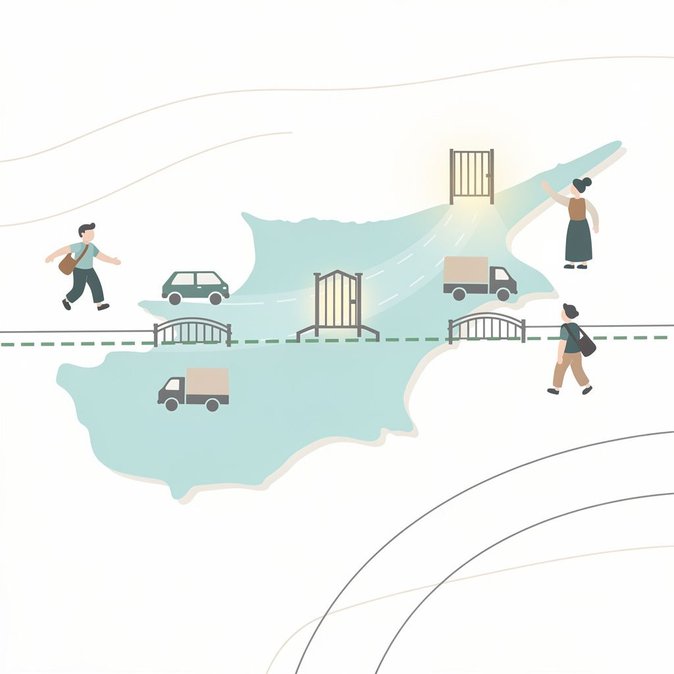
The Cypriot government believes it can clinch an agreement to open two additional crossing points—at Mia Milia and Athienou/Pyroi—before President Nikos Christodoulides and Turkish-Cypriot leader Tufan Erhurman meet UN Secretary-General António Guterres later this year. Government spokesman Konstantinos Letymbiotis said negotiations between the sides’ technical teams are “moving in the right direction” and could be wrapped up within weeks. If finalised, the deal would bring the total number of authorised Green Line crossings to eleven, easing bottlenecks for commuters, tour operators and lorry drivers moving between the island’s two communities. The UN-monitored buffer zone currently processes more than 1.3 million crossings a month, according to Interior Ministry data, and queues have lengthened since tourism rebounded in 2025. New checkpoints would shorten detours of up to 40 kilometres for businesses operating on both sides. Letymbiotis tied progress on the crossings to broader confidence-building measures aimed at reviving stalled reunification talks. Brussels is linking any upgrade of the EU-Turkey Customs Union to momentum on the Cyprus issue, increasing Ankara’s incentive to facilitate practical steps such as border openings. Greek-Cypriot negotiators have tabled 19 proposals covering methodology, substance and CBMs; the spokesman hinted that limited agreements could be announced even before the envisaged trilateral with Guterres. For multinationals, additional crossings would cut transit times for staff, service engineers and cargo moving to industrial zones in the north or to tourist projects managed by Turkish-Cypriot firms in the south. Yet legal risks persist: the Republic of Cyprus still deems entry via ports and airports in the north illegal. Mobility managers should remind employees that only recognised crossing points are lawful and that passports may be stamped by both sides. If Cyprus joins Schengen, as announced separately today, the crossing-point issue will become even more sensitive because the EU’s Entry/Exit System will need to register non-EU arrivals without undermining the buffer zone’s functionality. Companies should follow the negotiations closely and update travel policies as soon as the location, operating hours and documentation requirements for the new checkpoints are officially published.
Source: Stockwatch Cyprus