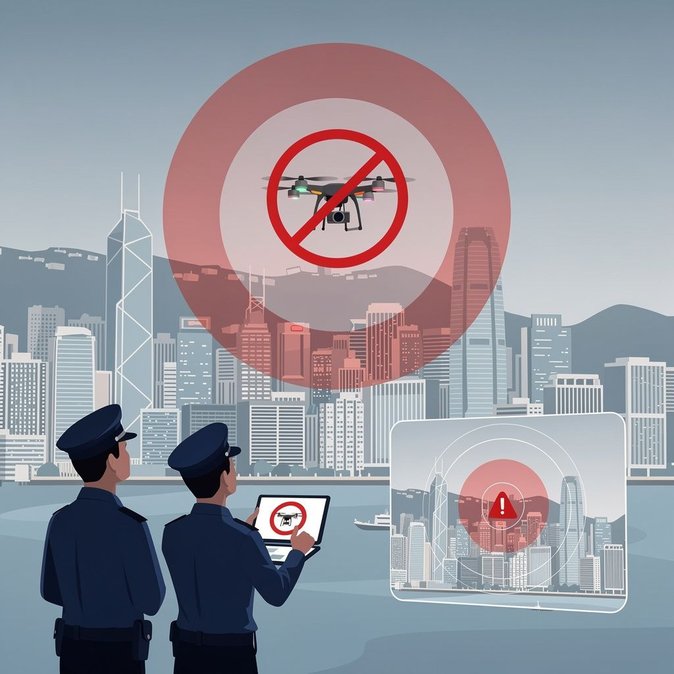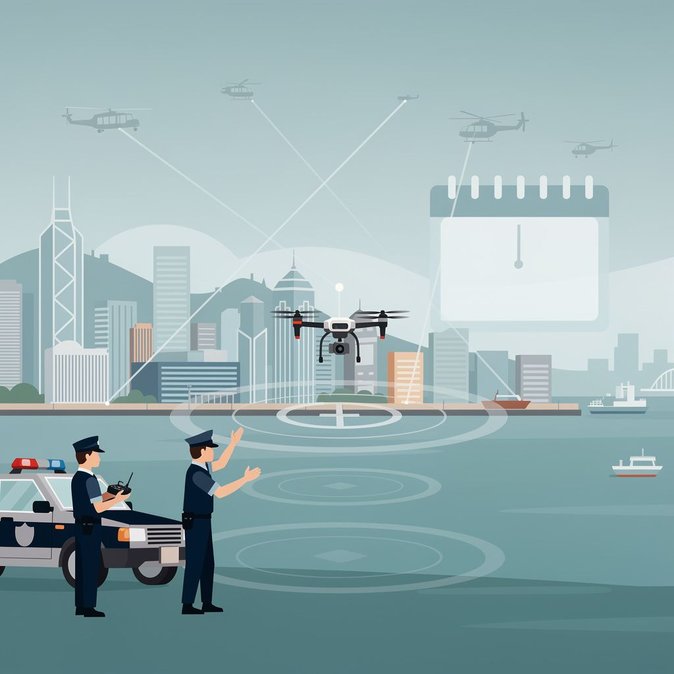
Hong Kong police arrested a 40-year-old man in Nam Sang Wai at 00:05 on 18 November for allegedly flying a drone inside a newly declared restricted-flight zone linked to the APEC Economic Leaders’ Meeting in neighbouring Shenzhen. Officers seized the unmanned aircraft and warned that violators risk prosecution under the Air Navigation (Hong Kong) Order. The Civil Aviation Department’s notice imposes blanket bans on drones, paragliders, kites and tethered balloons across northern New Territories from 17–20 November 2026, while a separate territory-wide restriction grounds all helicopters and light aircraft except those operated by the Government Flying Service. Similar curbs are in force in Shenzhen, Macau and parts of the Pearl River Delta to create a secure air bubble for visiting heads of government. For corporate travellers, the temporary airspace lockdown has already led to the cancellation of sightseeing-helicopter tours and point-to-point rotor-wing transfers to Shenzhen Bao’an and Zhuhai airports. Business-jet operators have been rerouting via Guangzhou’s southern corridor or filing early slot requests to avoid the 200-kilometre exclusion ring published in NOTAMs. Law-enforcement agencies have stepped up joint patrols with CAD inspectors, using radar detection vans and anti-drone jammers around wetlands popular with hobbyists. Authorities urge recreational pilots and media outlets to check the CAD’s interactive map and apply for permits only after the restrictions lift at 23:59 on 20 November. Travel-risk consultants advise incoming executives to build at least two hours of buffer into airport-transfer schedules during the summit period and to reconfirm any aerial-photography plans post-APEC. The arrest underscores Hong Kong’s zero-tolerance stance on unauthorised flights during major diplomatic events—a policy likely to feature again when the city hosts the 2027 Belt and Road Forum. Firms relying on drones for surveying or marketing should review contingency workflows and maintain updated third-party liability cover to avoid operational or insurance breaches.
Source: newsdesk.hk