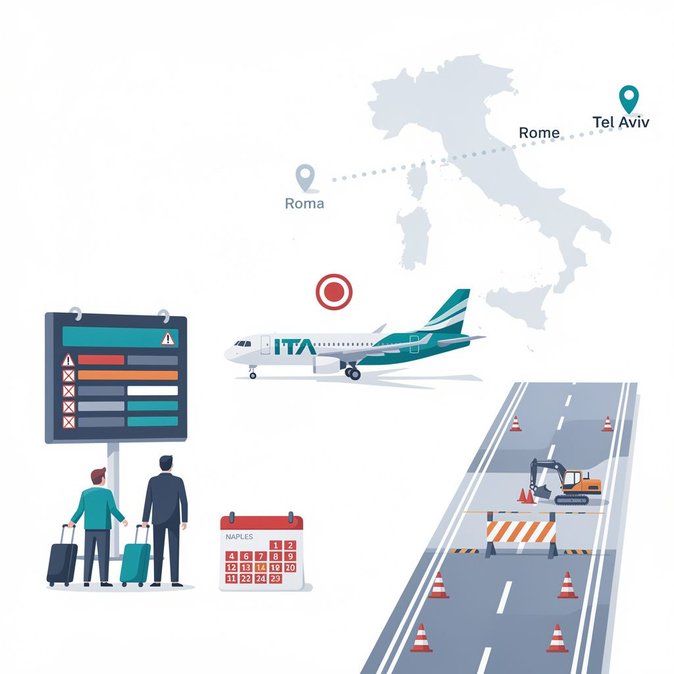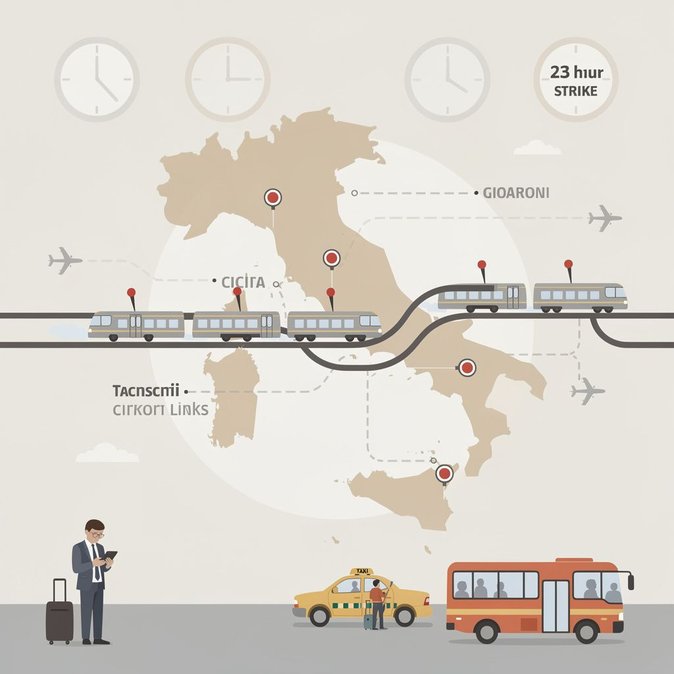
Italy’s transport ministry confirmed on 18 November that a 23-hour national rail strike will run from 21:00 on Friday 20 November until 20:00 on Saturday 21 November. The walk-out—called by CUB Trasporti, CAT and SGB—covers Trenitalia, Trenord, Trenitalia Tper and regional operator SAD, affecting long-distance, regional, airport-express and cross-border services. Under Italian law, trains departing between 06:00–09:00 and 18:00–21:00 must run, and the operators have published lists of ‘servizi garantiti’. Trenord warns that Lombardy commuters should brace for “significant cancellations” outside the protected time bands; Trenitalia states that Frecciarossa and Intercity services could be cut or limited to part-routes. The strike coincides with the peak Friday evening corporate-travel window, raising the risk of missed connections to Milan Malpensa, Venice Marco Polo and Rome Fiumicino. Employers should proactively rebook essential travellers on guaranteed trains, arrange car service alternatives, or authorise overnight stays to avoid stranded staff. Customers are entitled to ticket refunds or itinerary changes without fees if a train is cancelled. In parallel, the nationwide ENAV air-traffic-control strike pencilled in for Saturday 21 November (13:00–17:00) has been formally withdrawn by the unions, according to the CGIL strike calendar updated on 18 November. While major disruption to flights is therefore averted, local 24-hour actions by airport staff at Milan Malpensa, Venice Marco Polo, Pisa and Florence remain in place for Sunday 22 November. Airlines are expected to publish revised schedules 48 hours in advance. Travellers connecting between rail and air should note that the Malpensa Express and Leonardo Express fall under the rail strike notice; even if flights operate normally, trains to the airports may not. Companies relocating assignees or flying in candidates for visa appointments on 20–22 November should provide contingency budgets for taxis and advise passengers to arrive at airports at least three hours before departure. Long-haul cargo movements may also be delayed because freight locomotives are not covered by the essential-services exemptions. Logistics managers shipping personal effects or corporate equipment across Italy that weekend should factor in potential 24-hour slippages. The transport ministry has not ruled out further strike calls in December if pay-round negotiations fail to progress.