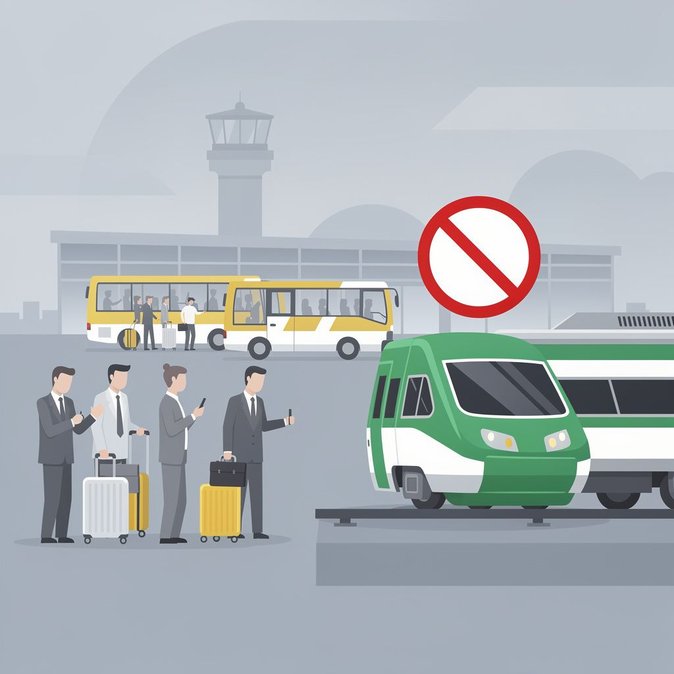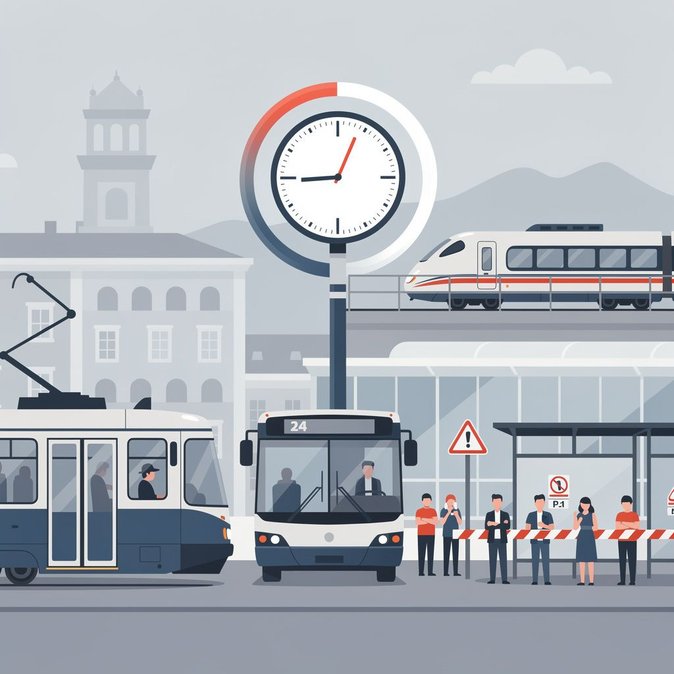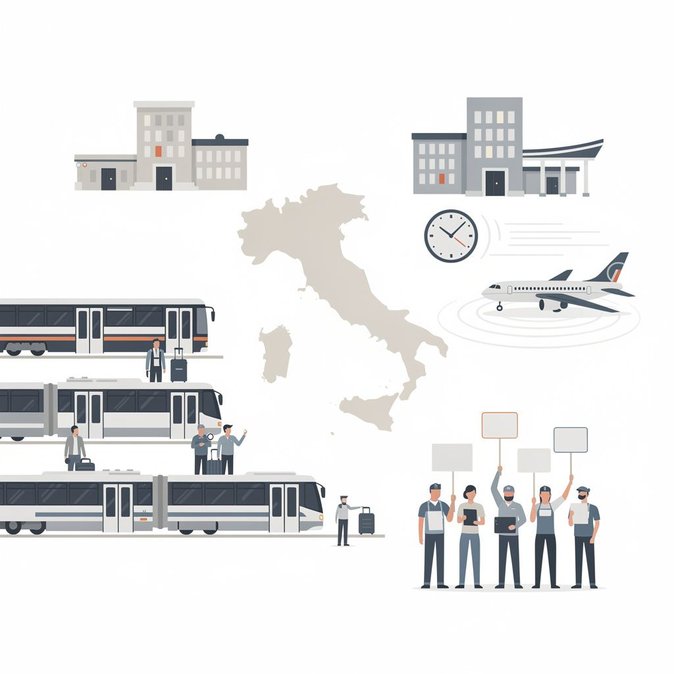
Italy will face a 24-hour general strike on Friday, 20 November, after the country’s largest trade-union federation CGIL called workers out in protest at the draft 2027 Budget Law. Although rail and aviation staff have been granted exemptions under Italy’s minimum-services rules, knock-on effects are still expected at major hubs as local public-transport workers, port and trucking staff, school employees and many public-sector offices join the walk-out. The strike formally starts at 21:00 on Thursday, 19 November, when some regional and long-distance trains operated by Trenitalia, Italo and Trenord will begin thinning out. Trenord has already published a list of “guaranteed trains” for the 20–21 November window, but warns that services outside the protected rush-hour bands may be curtailed or cancelled. Urban commuters in Rome, Milan, Naples and Turin should also brace for reduced metro, bus and tram frequencies throughout Friday, with service levels varying by city. Airports are likely to feel indirect pressure. Ground-handling crews and security contractors fall under the general-strike umbrella even if air-traffic controllers do not. Several airlines—including ITA Airways—have issued waivers allowing free rebooking for 20–21 November departures. Travellers connecting through Italian hubs should allow additional time for airport transfers and border formalities and monitor their carrier’s app for last-minute gate changes. For companies moving staff into or around Italy, the strike poses a material risk to itineraries and assignment start dates. Mobility teams are advised to bring forward time-sensitive movements, arrange private transfers where possible, and remind employees that taxi availability may be limited because many drivers belong to categories affected by the protest. Employers should also note that public offices—including immigration police (Questure) responsible for residence-permit issuance—may be short-staffed on Friday, potentially delaying paperwork collection. The action is the second nationwide stoppage in six weeks and underscores growing social unrest over fiscal tightening and cost-of-living pressures. Multinationals with large assignee populations in Italy should update their business-continuity playbooks and factor episodic strike-disruption into 2027 travel and relocation budgets.
Source: Rome Authority / Strike Tracker