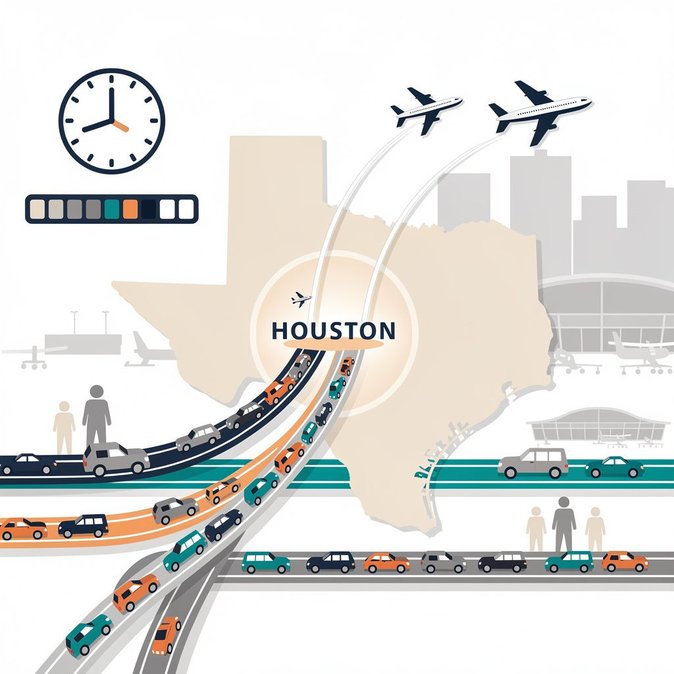
Houston’s Bush Intercontinental (IAH) and Hobby (HOU) airports anticipate two million passengers between November 19 and November 30, while an estimated 5.7 million Texans will travel at least 50 miles by car, according to AAA. The Houston Airport System warns that new parking rules, terminal construction and post-ground-stop airline schedule changes could trip up infrequent flyers. Peak flight departures are forecast for Wednesday, November 25, with arrivals peaking Sunday, November 29. Officials recommend arriving three hours early for international flights as carriers continue post-outage manual document checks. United Airlines—Houston’s largest tenant—says operations have normalized after a system outage earlier in the week but advises travelers to confirm gate assignments via the mobile app. On the roads, congestion hot-spots on I-10 and U.S. 59 are expected between noon and 7 p.m. on November 25 and again on November 29-30. Mobility managers relocating employees to Houston should stagger move-in dates or arrange temporary lodging to avoid these choke points. Lower fuel prices—now averaging $2.89 in the metro area—may encourage last-minute driving, compounding traffic. Employers should counsel staff on the region’s variable toll costs and offer commuter-benefit cards where possible. The bottom line: Whether by air or by road, Houston travelers face compressed peak windows that could disrupt client meetings and on-site project kick-offs. Flexible scheduling and remote-work contingencies remain key risk-mitigation tools for global mobility teams.
Source: Axios Houston