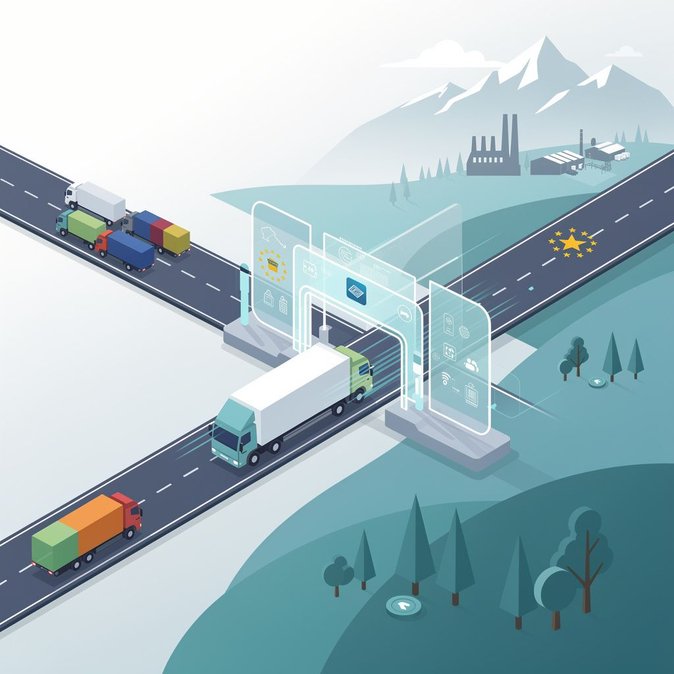
Austria has flipped the switch on a digital customs platform that promises to transform the way lorries cross its western EU external borders with Switzerland and Liechtenstein. Unveiled on 19 November by Finance Minister Markus Marterbauer and Vorarlberg Governor Markus Wallner, the €19.1 million “Smart Border Austria” system replaces the paper-based ‘Laufzettel’ procedure that required drivers to exit their cabs, queue at a customs office and wait for stamps. Now, transport firms preregister shipments electronically; licence-plate recognition cameras match the truck to the data, and green or red signals on gantries tell the driver whether they can proceed or must report for inspection. Average clearance time has dropped from about two hours to just 21 seconds. Five border stations—Höchst, Mäder, Meiningen, Hohenems and Lustenau—have been completely upgraded, following a year-long pilot in Feldkirch-Tisis. Since 1 November the platform has been running 24/7 in full production, handling roughly 2,000 vehicles a day with a reported 99 % fully automatic pass-through rate. Three trucks per direction can now be processed every minute, virtually eliminating the kilometre-long queues that once plagued the region and snarled Alpine transit corridors. For Austrian exporters and the many multinationals that rely on just-in-time supply chains through Vorarlberg, the benefits are immediate: shorter transit times, lower fuel and labour costs, more reliable delivery slots and drastically reduced carbon emissions from idling engines. Logistics giant Gebrüder Weiss, which co-developed the system, said it sees the project as a template for a future EU-wide e-freight network aligned with the Union Customs Code. Customs officials also gain. Real-time data analytics flag anomalies before the vehicle reaches the gate, allowing officers to focus on high-risk consignments instead of rubber-stamping compliant shipments. The finance ministry expects savings on staffing and infrastructure while boosting revenue through better risk-based enforcement. The project positions Austria—as Minister Marterbauer put it—“as the first EU external border with fully digitalised goods-traffic processing.” With neighbouring Germany and Italy struggling with chronic congestion on the Brenner and Tarvisio corridors, the initiative could bolster Austria’s influence in Brussels when the long-awaited EU Customs Reform is finalised next year.