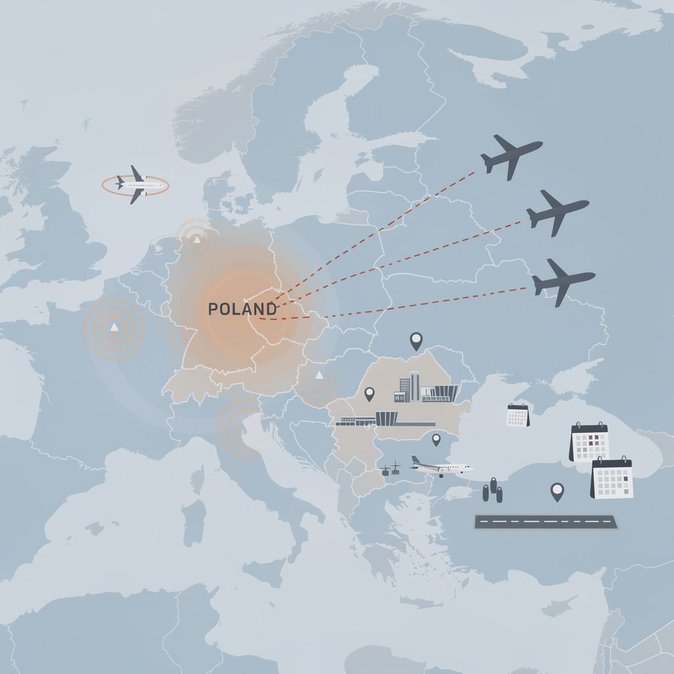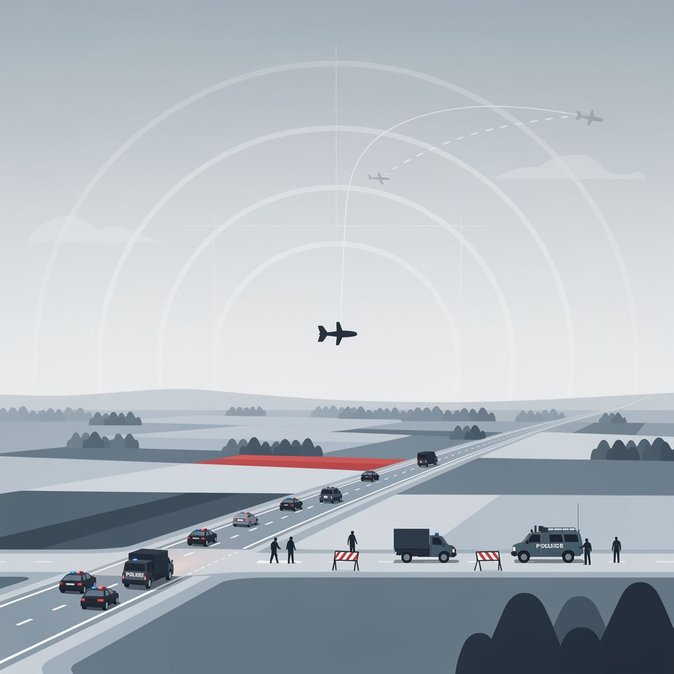
Within hours of the missile incident, Poland’s Operational Command confirmed that radar operators had tracked at least one additional unidentified airborne object at 06:30 local time over Biłgoraj county. Eyewitnesses reported a plume of smoke descending into woodland outside Chmielek, prompting local authorities to cordon off a 2-km radius. The European Observatory of Drone Incidents classified the episode as a ‘Category 4 cross-border incursion,’ the highest level before the use of kinetic counter-drone measures. For travellers, the immediate consequence was an extension of the low-altitude (below 3,000 m) no-fly zone already in force along the Ukrainian frontier. General-aviation operators, including corporate helicopter charters serving oil-and-gas projects in the Carpathian foothills, were grounded until further notice. The Civil Aviation Authority advised business-aviation schedulers to reposition aircraft to Lublin airport, where security screening capacity has been reinforced. Road mobility also took a hit. The S17 expressway was partially closed between Zamość and the Hrebenne border post as military explosive-ordnance personnel searched for debris. Truck queues into Ukraine stretched 10 km, disrupting ‘solidarity lane’ agri-food exports. Freight forwarders rerouted perishable cargo via Dorohusk, adding costs and transit time. Diplomatically, Warsaw lodged a protest note with Moscow and briefed NATO allies through the alliance’s Crisis Response System. While the incident remains under investigation, security analysts at the Geneva Security Centre warn that repeated small-scale violations risk becoming the "new normal," eroding confidence in the safety of Poland’s eastern investment corridor. Companies relocating staff to the Lubelskie logistics parks are urged to update travel-risk policies and ensure that emergency-notification apps cover drone-related alerts as well as missile warnings.
Source: Hromadske