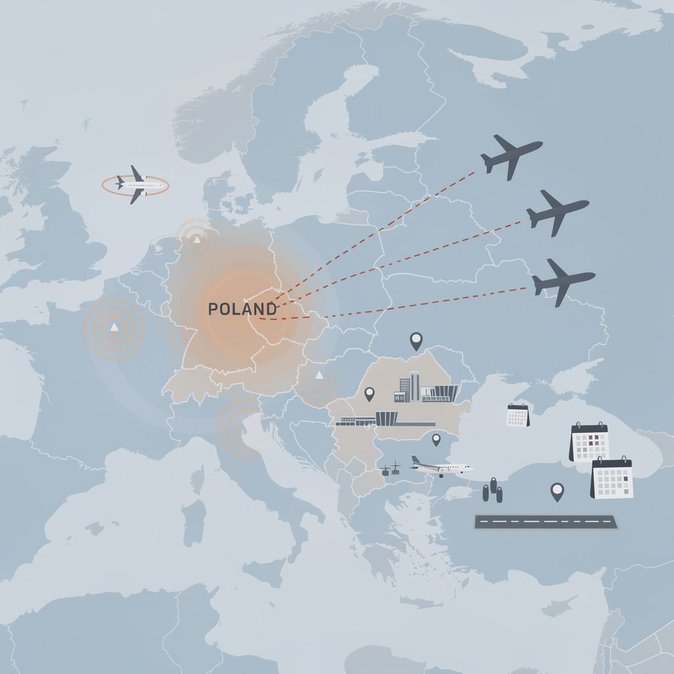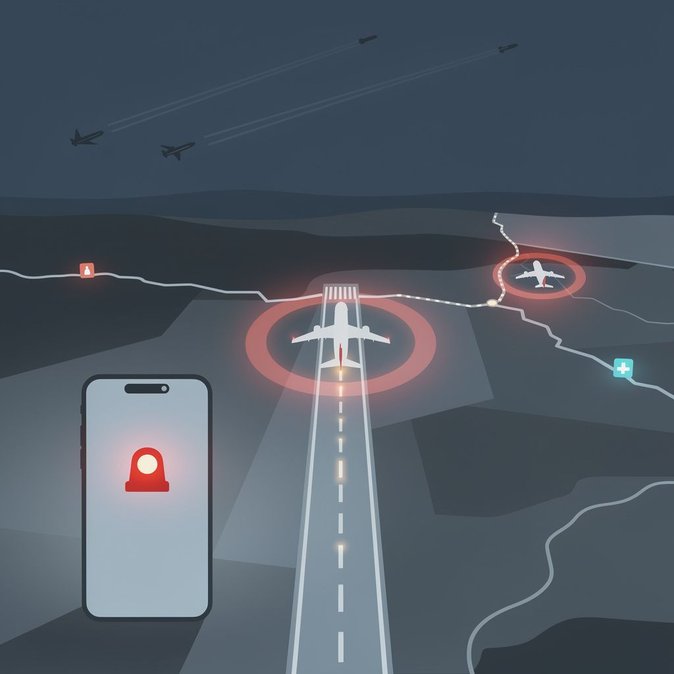
Within hours of the missile incident, Poland’s Government Security Centre (RCB) pushed emergency SMS alerts to residents in five counties of Lublin Voivodeship warning of an imminent air attack and advising people to shelter. The alert followed reports that an unidentified object had fallen near the village of Chmielek and a second near Rudnik nad Sanem. The Operational Command of the Polish Armed Forces confirmed that radar data were being analysed to establish whether the objects were Russian missiles, Ukrainian air-defence debris or unmanned aerial vehicles. As a precaution, the control tower at Rzeszów-Jasionka—NATO’s main logistics hub for aid to Ukraine—was evacuated shortly after 07:30 local time, suspending all civilian movements. Lublin Airport also paused traffic to keep airspace clear for military jets before both facilities reopened mid-morning. The episode highlights how rapidly regional security events can spill into civil-aviation operations. Rzeszów handles charter flights for US defence contractors, humanitarian organisations and energy-sector expatriates working in south-east Poland. Even a two-hour closure can ripple through supply chains, delaying critical spare parts destined for Ukrainian railways and pushing up same-day courier costs. Travel-management companies are advising clients to treat Poland’s border voivodeships as a live-risk environment: itineraries should include buffer time, and employees should register with their embassy’s crisis-alert system. Employers with staff routed through Rzeszów should verify that duty-of-care insurance covers “indirect conflict-related disruption,” a clause often overlooked in standard policies. Poland’s rapid alert demonstrated the efficacy of its Cell Broadcast system, introduced after the 2022 crisis. Nevertheless, HR and mobility teams should ensure expatriates’ phones are configured to receive Polish-language alerts and that non-EU nationals understand local shelter-in-place instructions.
Source: Hromadske