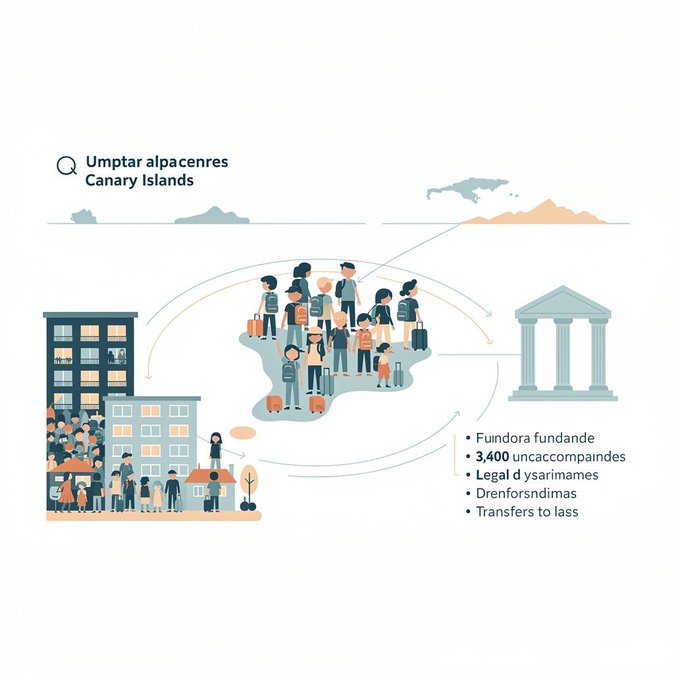
After another week of boat arrivals, the Canary regional government has reiterated an SOS to Spain’s central authorities. At a meeting in La Laguna on Friday evening, Social Rights Councillor Candelaria Delgado told State Secretary for Youth and Childhood Rubén Pérez that the archipelago now has 3,384 unaccompanied foreign minors under its care—an all-time high. The diocese-owned Seminario building, reopened on Wednesday, is already housing 177 teenagers transferred from the saturated makeshift camp in El Hierro. Delgado is requesting three immediate actions: (1) extraordinary financing to cover food, schooling and psychological support; (2) quicker processing of Article 5 transfers that move minors to mainland regions; and (3) extra staff in Government Sub-delegations to speed documentation. Without help, she warned, the islands will have to reactivate emergency tents that breach EU reception-standards and could become a legal liability for Spain. For global companies with assignees in the Canaries, the situation goes beyond humanitarian concern. Several hotel chains have been approached to lease space for temporary shelters, potentially reducing room inventory during the winter peak season. Relocation firms report that long-term rentals around Santa Cruz and Las Palmas are tightening as NGOs book apartments for youth programmes, pushing up corporate housing costs. Policy-wise, the plea strengthens momentum for a nationwide solidarity mechanism similar to Italy’s inter-regional quota system. If enacted, mainland provinces—many of which host multinational plants—would receive a fixed annual allocation of minors. HR departments should track draft legislation, as it could influence local social-service capacity and school-placement timelines for expatriate families. The regional call also heightens scrutiny of Spain’s Foreign Minors Act amendments expected in early 2027. Business-immigration advisers expect the reform to clarify work-permit pathways once these youths reach 18, creating a potential future talent pool in hospitality, agriculture and logistics—sectors where employers are already facing shortages.
Source: Europa Press