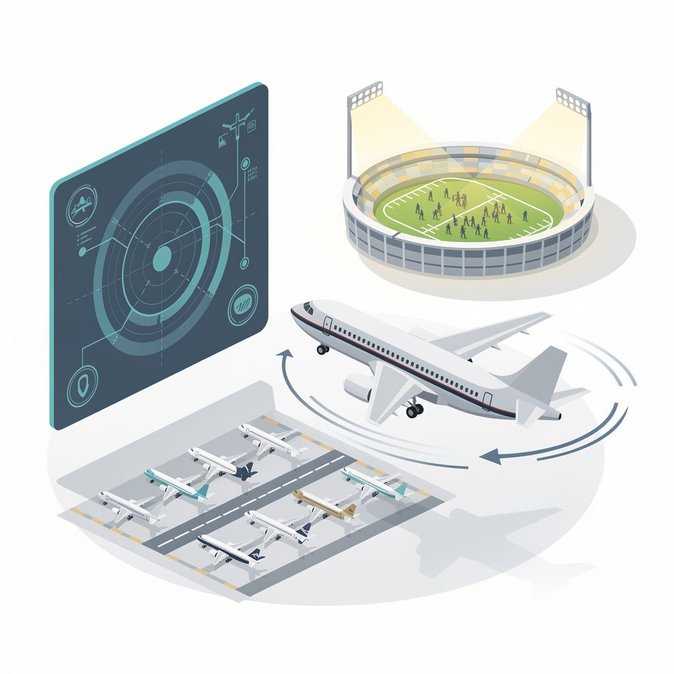
Homeland Security Secretary Markwayne Mullin is defending his use of a DHS-chartered aircraft to attend the high-profile LSU–Texas football game hours after the FAA lifted its nationwide ground-stop, calling the flight “mission-critical” given continuing air-traffic disruptions. Critics, however, say the optics are damaging at a moment when thousands of travelers were still stranded. At an early-morning press conference Saturday, Mullin argued that security protocols require the secretary to travel on government aircraft and claimed the flight doubled as an aerial inspection of repaired communication nodes in the Gulf region. Transportation Secretary Sean Duffy, standing alongside Mullin, offered a more cautious explanation, noting that “new FAA equipment may have overwhelmed older components,” but stopped short of linking the failure directly to SMART, the agency’s new AI flow-management system. For mobility professionals, the episode underscores how quickly transportation disruptions can become political flashpoints—potentially shaping funding debates that determine the pace of critical infrastructure upgrades. If lawmakers perceive agency mismanagement, they may tie future appropriations to stricter reporting requirements, delaying modernization projects that business travelers ultimately rely on. Corporate travel managers should monitor the upcoming House Homeland Security Committee hearing, where members are expected to grill Mullin on contingency planning for future outages. Any mandates that DHS or FAA provide real-time outage dashboards would give companies better data to reroute travelers proactively.
Source: The Daily Beast