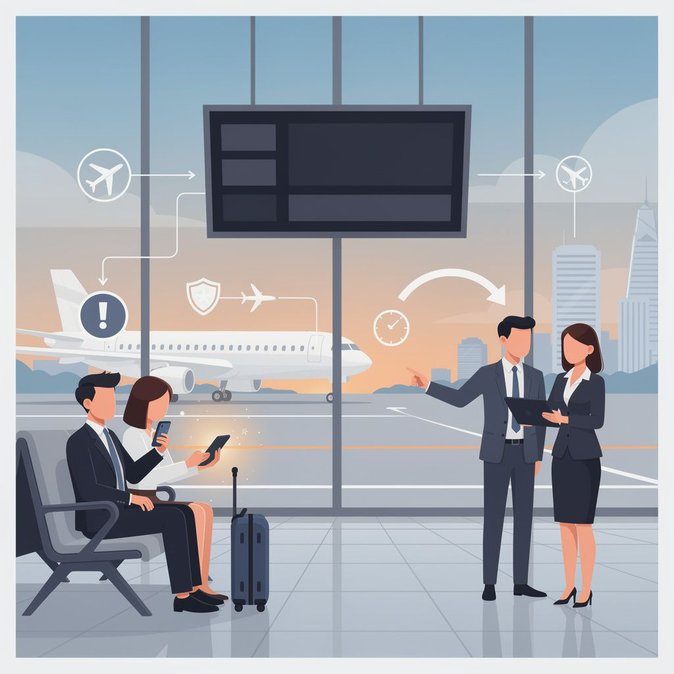
With the holiday season kicking off, many U.S. travelers remain on edge after last week’s unprecedented nationwide ground-stop—an anxiety now reflected in softer advance bookings and higher trip-cancellation insurance sales, according to industry analysts. An Associated Press report found that concern over cascading tech failures has become the new wildcard as millions prepare to fly for both work and family visits. The four-hour halt, triggered by a communications blackout across several Air Route Traffic Control Centers, stranded aircraft from coast to coast and forced airlines to re-position crews well into the following day. Although operations have normalized, business-travel agencies say Fortune 500 clients are asking for “plan B” routings—favoring nonstop flights and airports with robust redundancy measures. Several major employers have temporarily raised per-diem caps to account for potential overnight delays. Aviation insurers report a 28 percent spike in policies that cover missed connections, suggesting both leisure and corporate travelers are hedging against further glitches. Meanwhile, the FAA is fielding congressional questions about why recently upgraded routers in Texas and Arkansas were not screened out during pre-deployment testing. Travel-risk consultants advise multinationals to revisit duty-of-care protocols: ensure traveler tracking tools are fully integrated with airline apps and authorize employees to re-book proactively if delays exceed three hours. The Agency’s own Q&A says investigators are scrutinizing two remote sites for data overload issues, but has offered no timeline for a final report—leaving flyers to weigh convenience against resilience as they finalize year-end trips.
Source: Associated Press