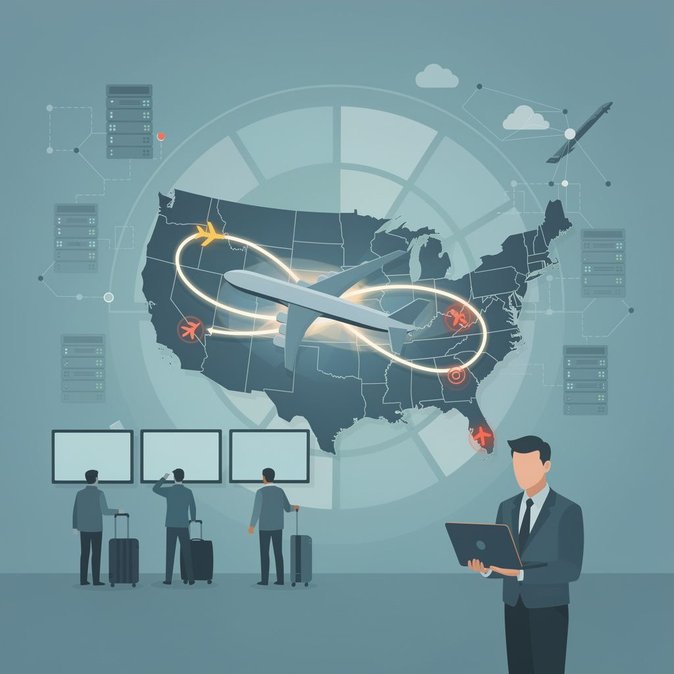
With Thanksgiving week underway, U.S. travelers are confronting an uncomfortable new variable: system reliability. Last Friday’s three-hour ground-stop—the longest U.S. flight halt since 9/11—was followed within days by independent outages at Microsoft’s cloud services and United Airlines’ dispatch system, rekindling fears of cascading failures across aviation, banking and government networks. Industry analysts note that modern aviation’s tight scheduling leaves little slack when key vendors go dark. Because airlines share common flight-planning and crew-rostering platforms, a single software glitch can ripple across hundreds of routes, stranding crews out of position and triggering rolling delays that last for days. The timing—just before a projected 81 million-person travel surge—could not be worse for corporate road warriors with client-facing deadlines. The Department of Transportation has opened an inquiry into whether carriers maintained adequate redundancy. Meanwhile, senators on the Commerce Committee have demanded an accelerated timetable for the FAA’s multibillion-dollar technology refresh, warning that “outage math” increasingly forces passengers to choose between interminable waits and expensive last-minute alternatives such as cross-country ride-shares or charter flights. Travel-risk managers are updating playbooks accordingly. Recommendations include booking critical meetings for the day after arrival, purchasing fully refundable fares during outage-watch periods, and encouraging employees enrolled in Trusted-Traveler programs to download CBP’s Mobile Passport Control app in case Global Entry kiosks go offline. Mobility departments are also urging expatriates returning for home leave to keep immigration documents and I-94 printouts on hand, since CBP outages can delay electronic status retrieval. While experts stress that no evidence links the recent outages to cyber-attacks, the cluster highlights systemic fragility. Until regulators and vendors harden legacy systems, enterprises will need to treat large-scale tech failures as a standard business-travel risk—not a black-swan event.
Source: Associated Press