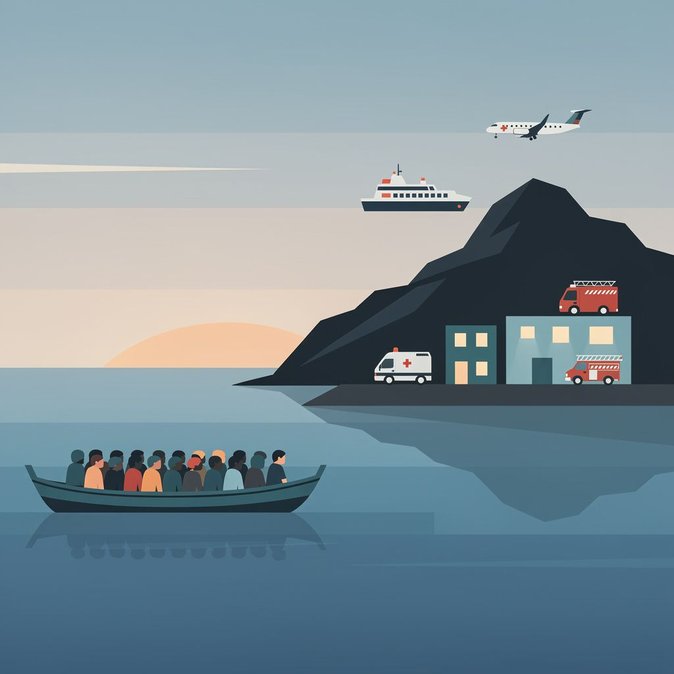
After a four-day pause, a wooden cayuco carrying 67 Sub-Saharan migrants—including five women and four minors—reached the port of La Restinga, El Hierro, at 09:40 h on Saturday, 21 November. Spain’s Guardia Civil detected two radar echoes at dawn and escorted the vessel to harbour, confirming it as the first landing since Monday. The arrival illustrates how volatile the Atlantic corridor remains. More than 11,000 people have landed in the Canaries in the first half of November, and maritime-rescue authorities must now juggle search-and-rescue assets with election-period security deployments. Local officials note that the constant diversion of helicopters and medics leaves routine services under-resourced. Businesses on El Hierro fear renewed disruptions. Hotel owners report block bookings by emergency-response teams, while exporters complain that refrigerated containers are being bumped from ferries to make space for chartered migrant transfers. Mobility managers should warn travellers that same-day inter-island flights routinely sell out when transfer operations accelerate. Under Spain’s current contingency plan, adults are screened, fingerprinted and usually transferred to Tenerife within 72 hours, while unaccompanied minors remain under regional care for months. This process creates rolling capacity gaps; companies relocating staff to the western Canaries should budget extra time for police registrations and NIE appointments, which share personnel with migrant-processing teams. Longer term, analysts expect Madrid to expand the ‘hot-spot’ model piloted in El Hierro, combining border checks with on-island asylum admissibility decisions. That could eventually shorten irregular stays but would also hard-wire border-control infrastructure into tourism hubs—an issue local chambers of commerce are lobbying to shape.
Source: NoticiasCanarias