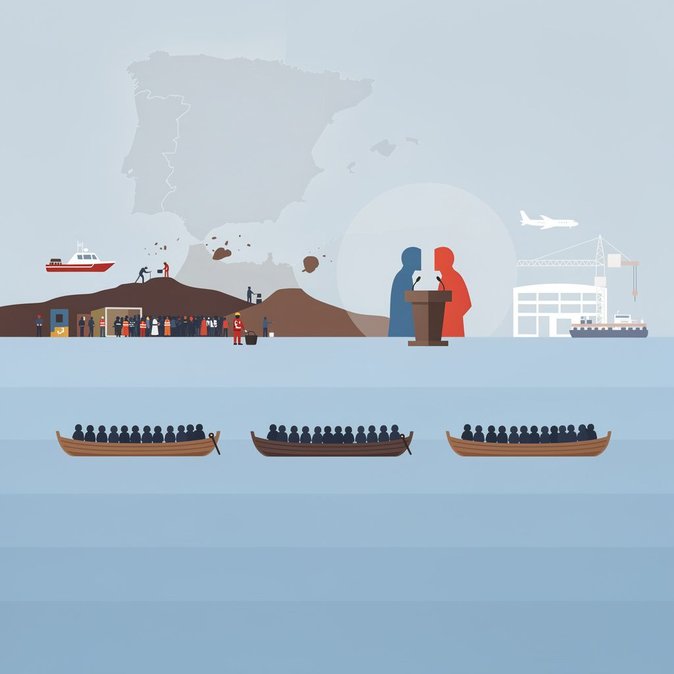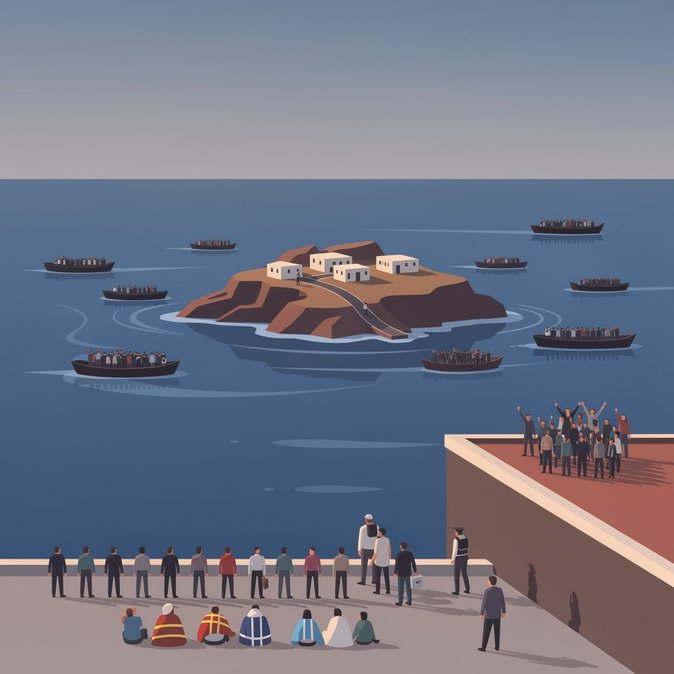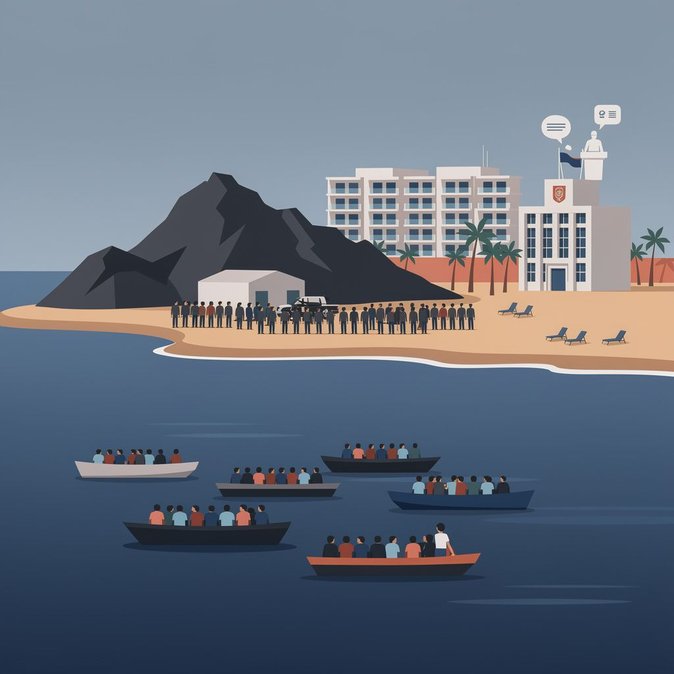
The Atlantic migration route roared back to life on Sunday after a brief lull, with five wooden “cayucos” escorted into the tiny fishing harbour of La Restinga on El Hierro. Salvamento Marítimo and two Guardia Civil patrol boats shepherded the overloaded craft—some located over ten nautical miles offshore—toward safety. By nightfall, authorities had registered 294 arrivals, including 25 women and 21 minors, mostly from Senegal, Guinea Conakry, Gambia and Mali. The new wave ends a quiet seven-day window that followed record landings earlier in November. Officials say the first boat left Thies, Senegal, a week ago, while another departed Saint-Louis only five days before rescue. Weather windows and the promise of calmer seas continue to draw departures despite increased patrols by the Senegalese navy and Frontex aircraft. El Hierro’s sole reception facility—originally built for 120 people—now regularly processes numbers triple its design capacity. Volunteers from the Canary emergency service and Red Cross erected additional tents on the quayside to undertake initial health checks, fingerprinting and asylum-pre-registration. Medical teams treated several passengers for dehydration and mild hypothermia, but no critical cases were reported. For Spain’s central government, the renewed flow intensifies political pressure just one week ahead of the 29 November general election. Conservative opposition parties accuse Prime Minister Pedro Sánchez of failing to stem irregular migration. Meanwhile, hotels on the island, heavily dependent on winter tourism, fear negative headlines may deter visitors. Corporate relocation managers with staff posted to Tenerife and Gran Canaria are monitoring ferry schedules, as the inter-island transfer of migrants sometimes leads to last-minute cancellations. Interior Ministry sources told Canarias7 that additional Guardia Civil riot units would reinforce El Hierro this week, and a chartered Iberia Airbus A321 is on standby to relocate vulnerable groups to mainland reception centres. Yet NGO observers warn that without a broader EU-West Africa plan tackling smugglers and offering legal pathways, the “stop-go” dynamic will persist well into 2027.
Source: Canarias7