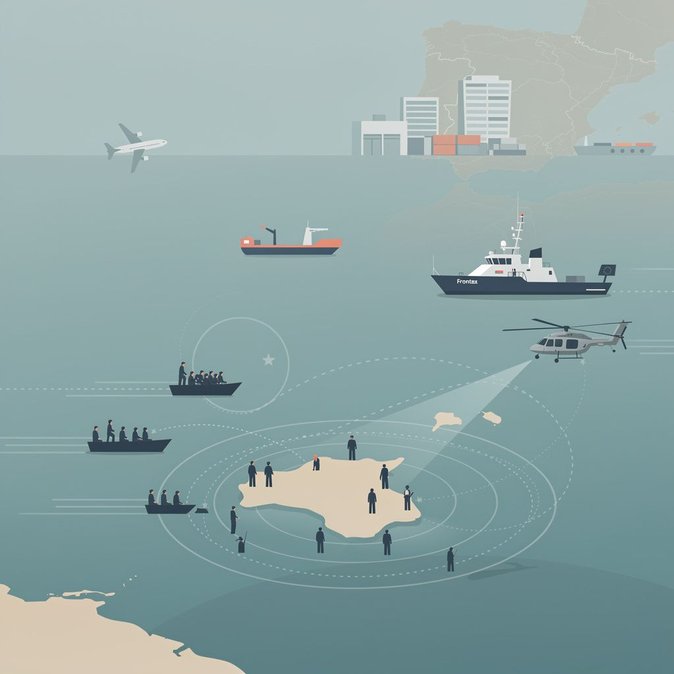
Campaigning ahead of the 29 November general election, Canary Islands PP leader Manuel Domínguez and Las Palmas candidate Sergio Ramos used a rally in Arrecife on 21 November to demand that ‘100 % of Frontex’ be stationed in the archipelago. They argue that existing EU contingents—estimated at 40-50 officers—focus on intelligence rather than patrols and are insufficient to deter a record flow of arrivals. The PP wants extra Guardia Civil and Policía Nacional posts, more drones and satellites, and real-time information-sharing with Senegalese and Gambian navies. The party says it will insert the measures into the post-election coalition negotiations, pressing potential partners—particularly Vox—for hard security guarantees. For multinational employers, the proposal signals a likely pivot toward enforcement-centred migration policy should the PP enter government. Past Frontex deployments have come with stricter carrier-liability fines and more intensive document checks at islands’ ports and airports, occasionally slowing crew rotations and short-haul business flights. Legal advisers note that a larger Frontex footprint could also accelerate on-island screening, shortening average stay times in reception camps—an outcome hospitality firms would welcome. However, human-rights NGOs warn that fast-track inadmissibility decisions raise litigation risks that can tie up resources and delay labour-market access for those eventually allowed to remain. Companies should monitor coalition talks for hints of accompanying regulatory reforms—particularly any move to tighten Spain’s arraigo social regularisation path, which many long-term foreign assignees rely on as a back-up to work-permit renewals.
Source: elDiario.es / Canarias Ahora