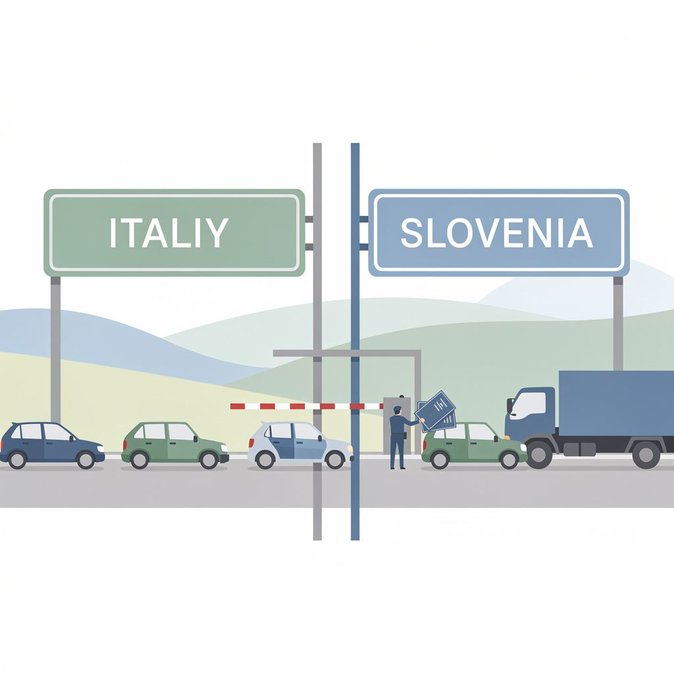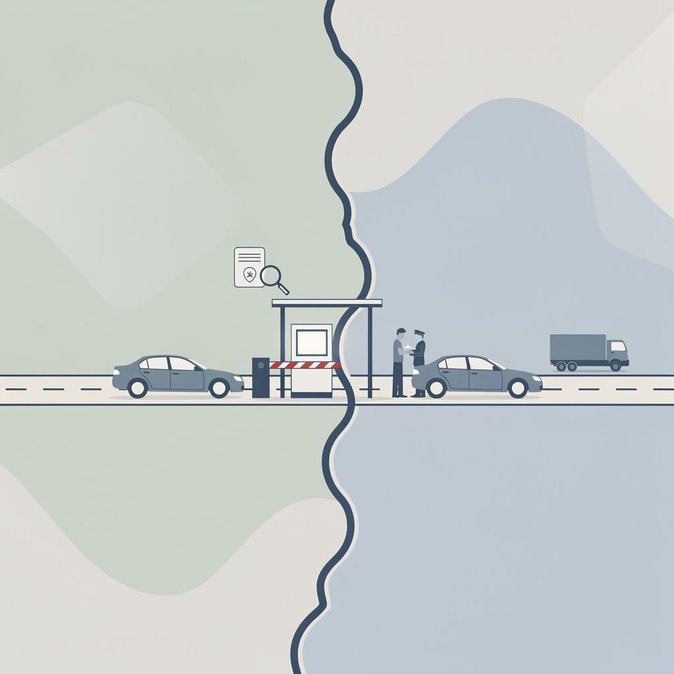
An updated table published this morning on the European Commission’s ‘Temporary Reintroduction of Border Control’ portal confirms that Italy has filed a fresh six-month extension of identity checks at its land frontier with Slovenia, running from 19 December 2026 to 18 June 2027. The measure, first introduced during the 2024 Middle-East security flare-up, is justified by Rome on continued fears of terrorist infiltration via the Western Balkan route and persistent migrant-smuggling networks. Under Article 25 of the Schengen Borders Code, Member States may re-impose internal controls only as a last resort and must notify Brussels four weeks in advance. Italy’s latest filing pushes the cumulative duration close to the two-year threshold after which additional Commission scrutiny applies. The controls, carried out at main crossings such as Fernetti and Rabuiese, involve document checks, vehicle inspections and mobile patrols up to 20 km inside Italian territory. For companies moving goods or personnel between Trieste’s port platform and Slovenian manufacturing clusters, the extension could add 15-20 minutes per crossing, according to the Friuli Venezia Giulia Logistics Association. Coaches on the Venice–Ljubljana route already budget extra dwell time, and relocation providers report a spike in requests for Italian residence certificates from cross-border commuters needing ‘fast-lane’ processing. Human-resources teams should brief employees holding residence permits issued by other Schengen states to carry proof of accommodation and employment contracts, as anecdotal evidence suggests secondary questions on purpose of stay have increased. Event organisers planning incentive trips that combine Venice and Slovenia’s lakes should also re-sequence itineraries to avoid peak-hour queues. Although the policy currently targets only the Slovene border, analysts warn that similar extensions could follow on other internal frontiers if the security outlook deteriorates. Corporates with mobile workforces are advised to store digital copies of passports and permits and monitor Commission notifications, which are published without prior press release and can change with just 24 hours’ notice.