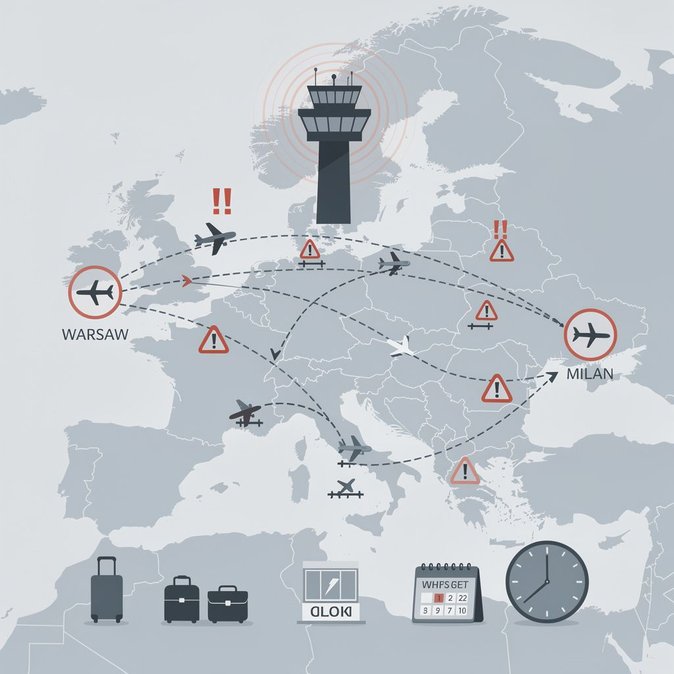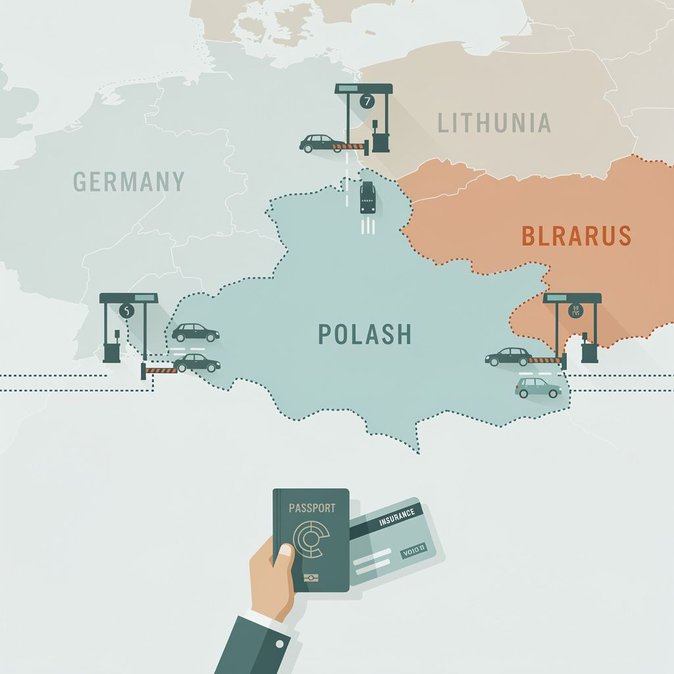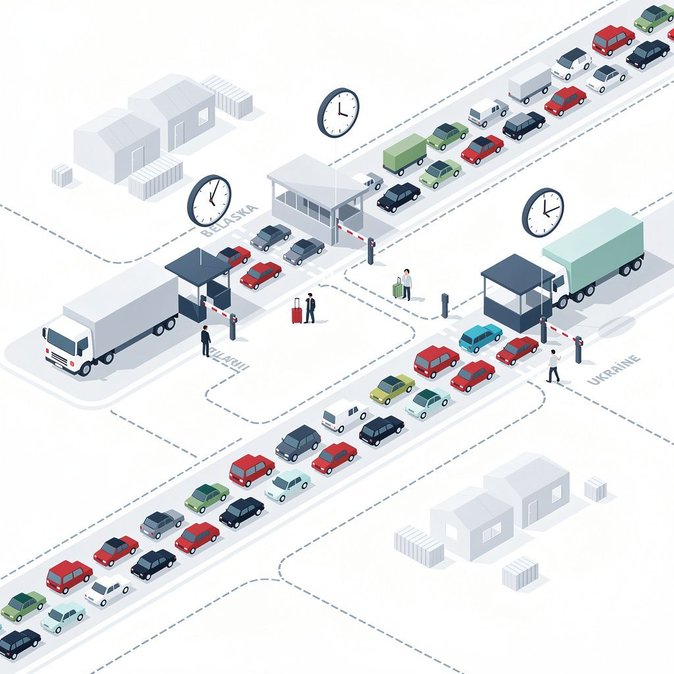
Real-time monitoring platform KolejkaNaGranicy.pl shows exceptional congestion at Poland’s external Schengen frontiers on 22 November. The longest delay was recorded for trucks and cars entering Poland from Belarus at Terespol–Brest: 13 hours for the inbound lane and 35 minutes outbound. At the Kuźnica–Bruzgi crossing, drivers heading into Belarus faced queues of 4 hours 45 minutes. On the Poland–Ukraine border, waits peaked at Zosin–Ustyluh (5 hours 11 minutes) for vehicles entering Poland and 1 hour 15 minutes for those leaving at Korczowa–Krakowiec. Congestion is being blamed on holiday traffic, ongoing infrastructure works and the continuation of Poland’s temporary border checks with Germany and Lithuania, which divert some freight to eastern routes. Logistics associations warn that transit times for just-in-time supply chains are becoming unpredictable. Several manufacturing firms in Podlaskie and Lublin voivodships have already shifted non-critical shipments to rail to avoid driver overtime costs. Passenger traffic is also affected; bus companies have issued advisories recommending travellers bring food, water and thermal blankets. The Polish Interior Ministry says it is working with Belarusian and Ukrainian counterparts to synchronise customs staffing, but political tensions and enhanced security screening continue to slow processing. Analysts expect bottlenecks to persist until after the New Year peak unless additional lanes and digital pre-clearance pilots are expedited. For global-mobility managers, the advice is to reroute assignees via Schengen internal borders where possible, schedule cross-border client visits earlier in the day, and factor contingency stock into production calendars.
Source: KolejkaNaGranicy.pl