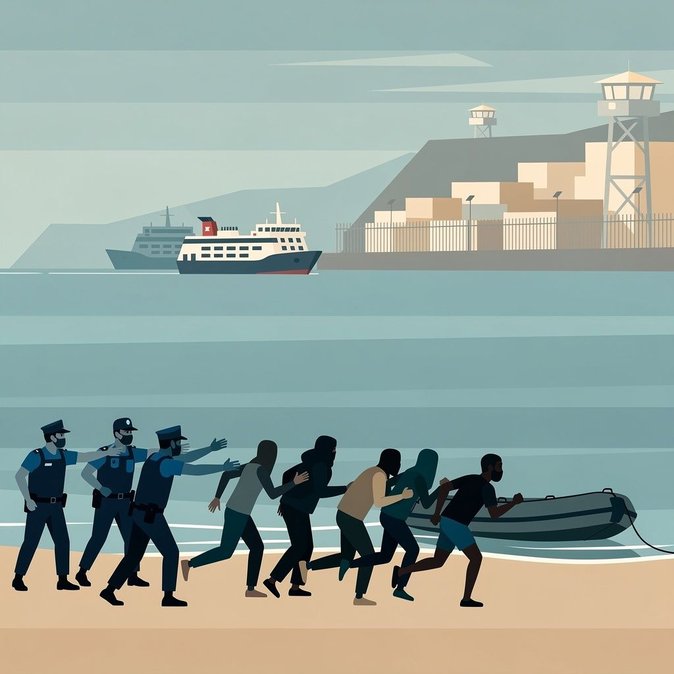
In the pre-dawn darkness of Sunday, 22 November, CCTV cameras in Ceuta’s La Almadraba district captured a group of some 15 people sprinting across a coastal road while hoisting a grey rubber dinghy above their heads. The footage, published by El País on Monday afternoon, illustrates how desperation has pushed many of the 20,000 migrants who entered the North-African enclave in July to attempt blatant daylight departures to mainland Spain. Police officers, alerted by surveillance teams, intercepted the group barely a kilometre from the El Tarajal border fence. According to investigators, the migrants had paid €6,500 each to a smuggling ring that also charged €15 a day for bedding in safe houses around the El Chorrillo neighbourhood. The operation underscores a shift in tactics since August, when departures were organised from secluded coves. With shelters overflowing and border checks intensifying, facilitators now gamble on speed rather than stealth, launching boats from public beaches before patrols converge. For mobility stakeholders, the incident signals renewed instability on the Strait of Gibraltar route. Ferry operators in Algeciras and Tarifa report increased stowaway attempts on cargo decks, forcing extra inspections that slow freight flows between Spain and Morocco. Companies moving goods through these ports should anticipate schedule buffers and verify that drivers carry identity documents to avoid secondary checks. Authorities say the thwarted launch is part of a broader crackdown in Ceuta that has already dismantled three boat-running cells this month. Yet frontline NGOs warn that, without rapid asylum processing or humanitarian corridors to the mainland, risky sea crossings will continue – raising the profile of Ceuta as a flashpoint for EU border policy heading into 2027.
Source: El País