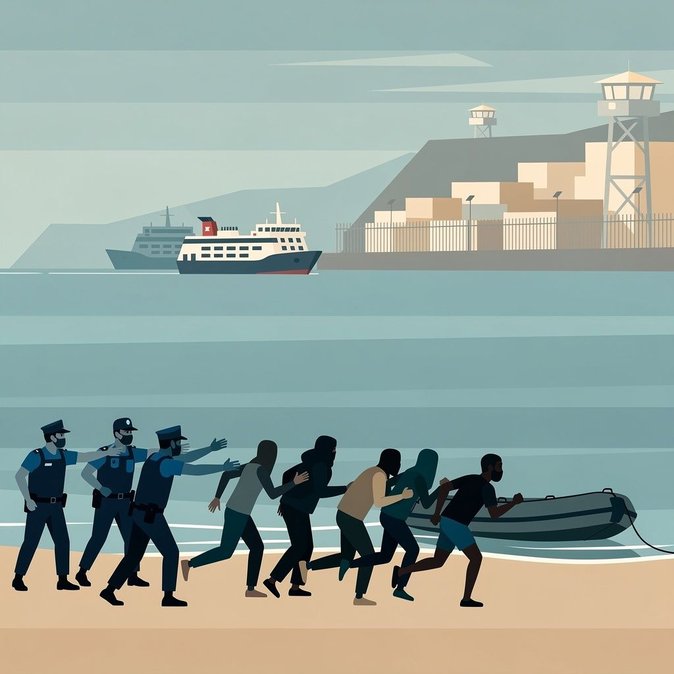
Salvamento Marítimo resumed a frenetic pace of rescues in the early hours of Monday, 23 November, hauling four wooden cayucos carrying 433 people – including 29 minors – to the tiny Canary Island of El Hierro. A further two boats with several dozen people on board reached Tenerife the same morning, pushing the day’s total close to 500. The renewed influx ends a brief lull last week and brings November’s tally on El Hierro alone to almost 11,000 arrivals – nearly equal to the island’s resident population. Spanish authorities say most of the passengers departed from Senegal, Gambia and Guinea-Conakry, making an 1,500-kilometre journey that the calm seas of late autumn have turned into one of the busiest Atlantic corridors for irregular migration. Reception facilities at La Estaca port and the island’s makeshift triage sites are again at breaking point, forcing emergency transfers to Tenerife and Gran Canaria to free up space for new arrivals. Local hospitals are treating dozens for dehydration, hypothermia and fuel burns while humanitarian groups warn that shelters are running out of blankets, baby formula and trauma-support staff. The Canary Islands government has asked Madrid and EU partners for rapid relocation of vulnerable migrants, particularly unaccompanied minors, arguing that small islands cannot meet international child-protection standards alone. For companies moving staff or equipment through the archipelago, the pressure on medical, security and port resources is already causing delays. Charter vessels have reported longer waits for pilotage and berth allocation, and tour operators say last-minute room blockings for emergency accommodation are squeezing hotel capacity ahead of the winter peak. Mobility managers with operations in West Africa or the Canary Islands are advised to monitor Spanish Coast Guard alerts and plan for potential diversions or delayed crew changes. Longer-term, the spike will feed into Spain’s national debate on labour shortages and managed migration. Employers in agriculture and hospitality point out that many of the new arrivals possess sought-after skills but face slow asylum and work-permit queues. If November’s pace continues, the archipelago is on track for a record 150,000 sea arrivals in 2026, a scenario that will test Schengen-area solidarity and Spain’s border-management capacity well into 2027.
Source: RTVE Noticias