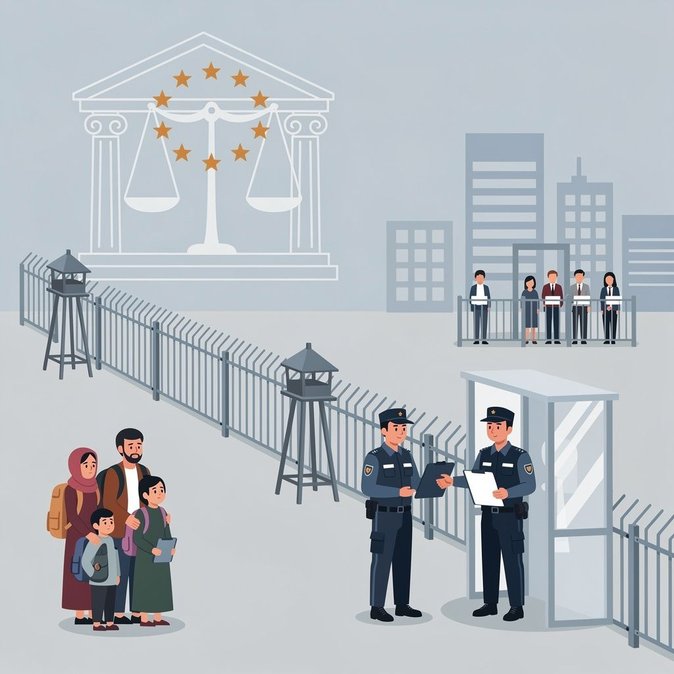
Border-guard officers from the Carpathian Unit uncovered an overstaying Belarusian national during a routine labour-law inspection at a construction company in Tarnów on 24 November. Database checks revealed that the employee had been entered in Poland’s register of undesirable foreigners; he was immediately issued a return order and a three-year Schengen-wide re-entry ban. The case illustrates Poland’s increasingly data-driven enforcement approach. Since July, the Border Guard has linked its labour-inspection tablets to the Entry/Exit System, allowing on-site verification of each worker’s lawful stay. With EU Blue-Card and Seasonal-Work permits now embedded in the system, officers can instantly spot discrepancies between declared and actual employers. For companies the message is clear: merely holding a work permit is not enough; HR files must match real-world assignments and be updated in MOS within 14 days of any change. Non-compliant employers face fines up to PLN 30,000 and a potential ban on hiring third-country nationals for two years. The incident also highlights risks for Belarusian citizens in Poland. Since the 2021 hybrid-border crisis, Warsaw has tightened visa issuance and monitors overstays closely. Mobility providers should counsel Belarusian transferees to keep original residence documents on them at work sites and ensure that any change of address or employer is formally reported. With construction firms under pressure to meet EU-funded infrastructure deadlines, the temptation to hire at short notice is high. Today’s enforcement action shows that Polish authorities are willing to use real-time data to clamp down, reinforcing the need for robust compliance audits before onboarding foreign staff.