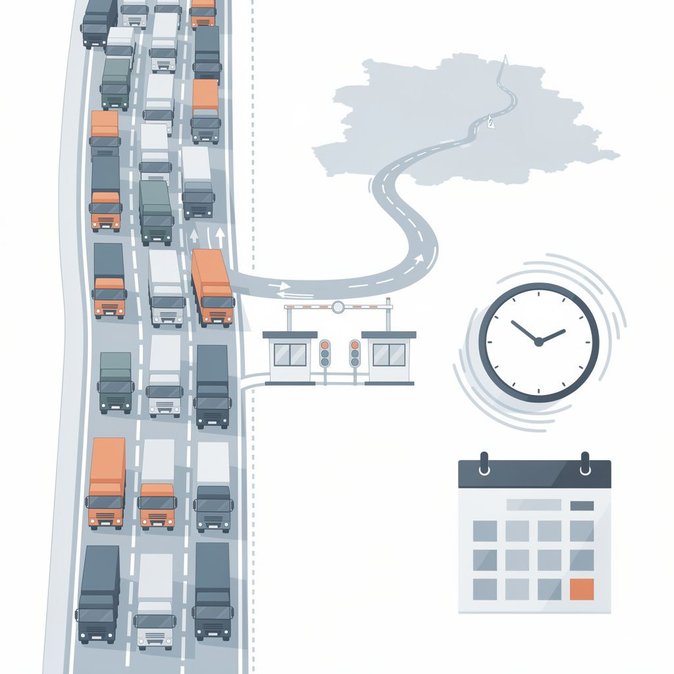
Live border-queue trackers reported extreme congestion on the Poland–Belarus frontier this morning, with trucks entering Poland via Koroszczyn–Kozlovichi facing waits of five and a half hours (333 minutes) at 09:30 CET. At the same time, private vehicles leaving Poland experienced a comparatively light 15-minute wait at Bobrowniki–Berestovitsa. Koroszczyn is the principal freight gateway on the Warsaw–Minsk corridor and handles the bulk of EU-bound Belarusian timber, fertiliser and consumer electronics. Logistics operators attribute today’s gridlock to a customs-IT switchover on the Belarusian side combined with Polish veterinary inspections of agri-food cargoes. The jam comes despite Warsaw’s restrictions on Belarusian-registered trucks; EU hauliers still use the crossing because alternatives through Lithuania add 300 km. For supply-chain planners the implications are immediate. Cold-chain goods risk temperature breaches, and just-in-time components for Polish manufacturing plants may arrive a day late. Several 3PLs activated force-majeure clauses this morning, rerouting via Budzisko–Kalvarija in Lithuania. However, that detour faces axle-weight limits that prohibit heavier semitrailers. Mobility managers moving household goods across the border should build at least a 24-hour buffer into transit schedules or use rail containers via Małaszewicze. Travellers with diplomatic passports can request escorted clearance, but business visitors are advised to fly to Vilnius or Riga and continue by road from the north. The Polish Border Guard has yet to announce mitigation steps, but industry sources expect temporary lane reversals to prioritise EU-destined trucks ahead of the Black Friday retail peak. If congestion persists, Warsaw may again suspend weekend lorry bans on domestic highways to clear the backlog inland.