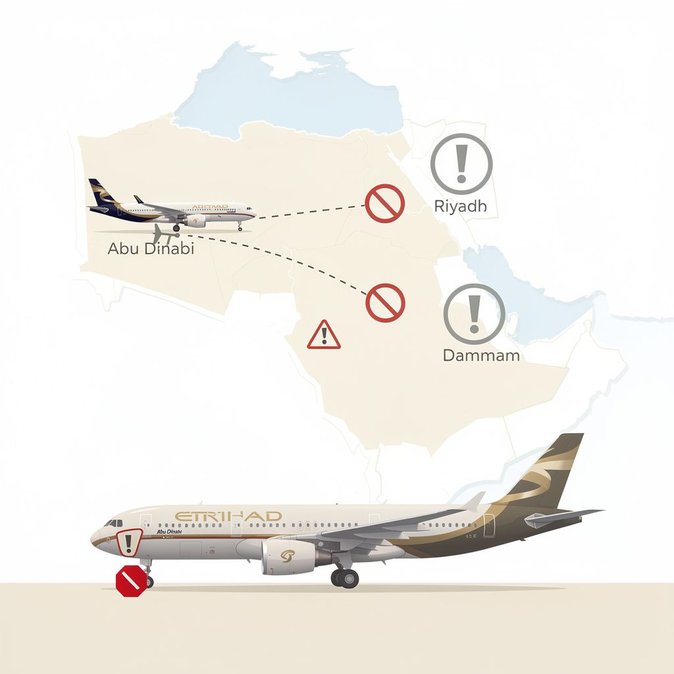
Etihad Airways has pushed its suspension of flights from Abu Dhabi to Riyadh and Dammam through 30 November, citing ongoing regional security risks that continue to trigger ballistic-missile and drone interceptions over Saudi airspace. The carrier first halted the services in mid-October after attacks on Riyadh’s King Khalid International Airport and has rolled the window forward several times. Passengers booked on the affected sectors may re-route, re-book or refund without penalty. The extension underscores how quickly Middle-East aviation schedules can shift in response to geopolitical developments. While the European Union Aviation Safety Agency (EASA) issued only an advisory—leaving final decisions to airlines—risk insurers and crew unions have raised premiums and exposure limits, increasing the cost of operating into contested airspace. Business-travel managers moving staff between the UAE and Saudi Arabia should therefore verify every flight segment, not just the long-haul legs into Abu Dhabi or Dubai. Alternatives include Emirates’ services to Jeddah (still operating) or routing through Muscat on Oman Air, but even these can change at short notice. Organisations with critical assignments in Saudi Arabia are advised to build contingency budgets for last-minute overland transfers or charter options. Etihad’s decision comes as Lufthansa Group begins a phased return to Dubai, illustrating a fragmented recovery: some carriers deem the risk acceptable, others opt for prolonged suspensions. The patchwork complicates itinerary building and increases the workload for mobility teams tasked with duty of care and cost control. Practical tips: 1) load Etihad’s waiver code into booking tools to automate free changes; 2) secure travel-risk insurance that does not automatically exclude rerouted journeys; 3) brief travellers on possible overnight stays in Abu Dhabi if onward legs cancel. Expect further extensions if the security advisory remains in force beyond January 2027.
Source: Air Traveler Club