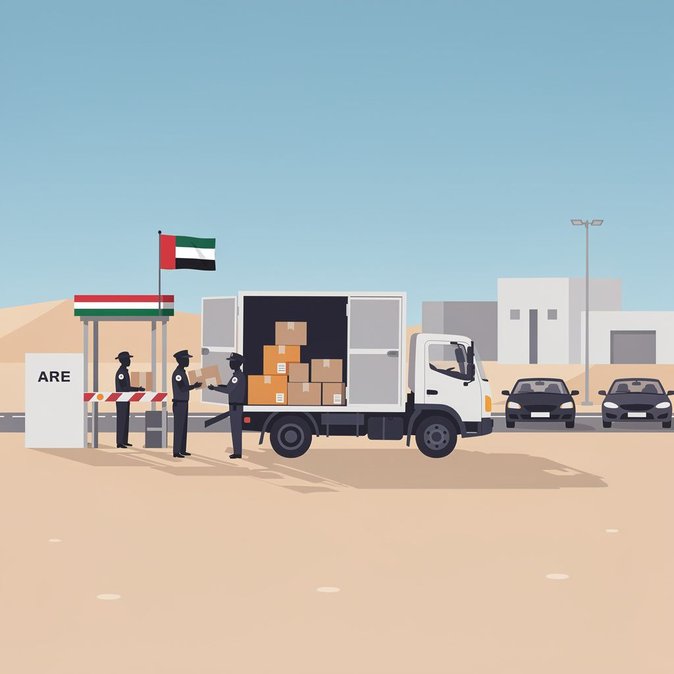
The Federal Authority for Identity, Citizenship, Customs & Port Security (ICP) revealed on 26 November that its Ports Security Administration intercepted 24.2 kilograms of crystal methamphetamine and marijuana concealed in a truck entering the UAE. Officers spotted suspicious trailer modifications, deployed scanning equipment and uncovered 28 plastic packages in a specially built compartment. The driver—an Asian national whose identity was withheld—was arrested and faces prosecution under Federal Decree-Law 30 of 2021, which prescribes severe penalties for trafficking. While the seizure is a law-enforcement story, it carries mobility implications: heightened inspections at land borders often cascade to airports and seaports as authorities recalibrate risk profiles. ICP statistics show 765 drug seizures at UAE borders in 2026, involving roughly 390 kg of narcotics and 50,000 pills. The spike has prompted investment in AI-enabled cargo scanners and additional canine units. Logistics firms and corporate mobility teams moving household goods for assignees should expect longer clearance times and may need to provide more detailed inventories. The incident also underscores the UAE’s zero-tolerance stance on narcotics, a message frequently included in arrival-card warnings. Travellers carrying prescription medication that could trigger false positives are advised to keep notarised prescriptions and, where possible, secure pre-clearance through the Ministry of Health’s e-approval portal. For now, no formal advisory on processing delays has been issued, but stakeholders should monitor ICP communiqués and factor extra buffer time into cross-border truck movements, particularly on routes from Oman and Saudi Arabia.
Source: Gulf News Week