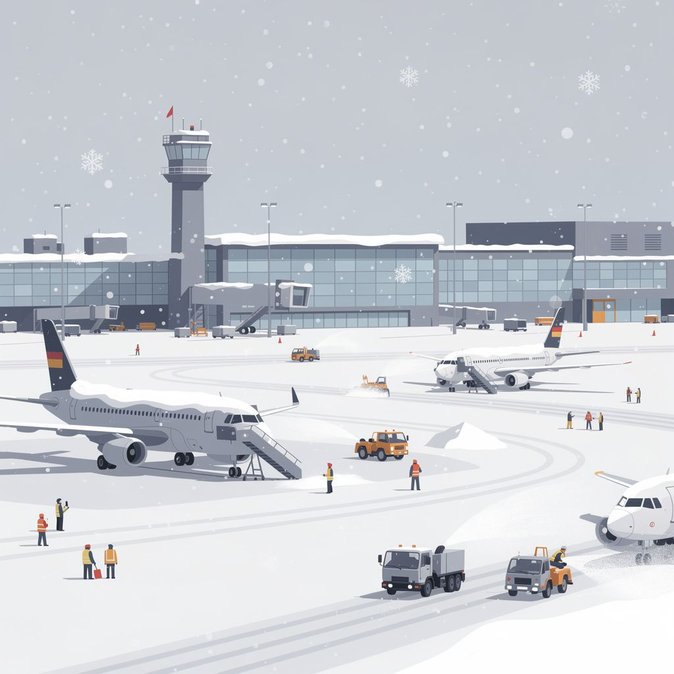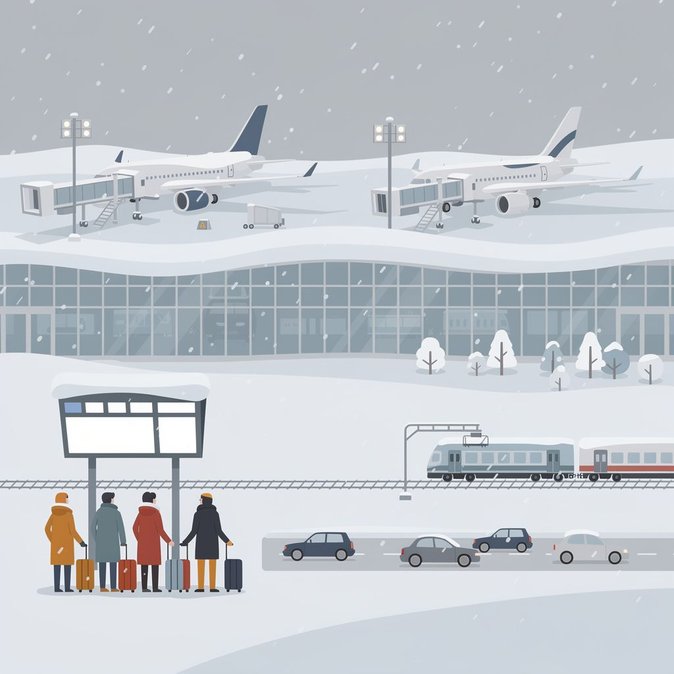
Austria woke up on 27 November to the heaviest November snowfall in more than four decades and an aviation log-jam that rippled through every mode of transport. 19 centimetres of snow were measured at Vienna’s Hohe Warte weather station overnight, and by dawn runway crews at Vienna-Schwechat airport had deployed more than 100 winter-service vehicles and 500 staff. Even so, departure capacity fell to 20 movements an hour—barely half the norm—and every aircraft required a full de-icing cycle. Austrian Airlines alone had to rebook some 9,000 passengers after cancelling or severely delaying dozens of rotations; an Aer Lingus service to Dublin left seven hours late, while flight OS 431 to Valencia waited on the apron for 7 hours 30 minutes. The knock-on effects were felt far beyond the airport perimeter. Long-distance ÖBB trains reported residual delays because crews and rolling-stock could not be repositioned in time; the A21 motorway closed for seven hours, and truck operators faced mandatory chain rules on alpine passes. Vienna’s city authorities also warned of heavy traffic on arterial roads leading to the shopping outlets that traditionally attract cross-border day-trippers from Slovakia and Hungary on Black Friday weekend. For corporate mobility managers the episode is a reminder that Vienna, a key Central-European hub for CEE assignments, remains vulnerable to early-season snow. While compensation under EU 261 is unlikely in ‘extraordinary circumstances’, employers remain liable for duty-of-care obligations: arranging hotel accommodation, meals and onward travel, and documenting costs for audit purposes. The Austrian Agency for Passenger Rights (apf) stressed that airlines must still offer re-routing or a full refund, and business travellers delayed overnight are entitled to reasonable hotel and transfer costs, which should be claimed within six weeks. The airport says normal operations should resume by late Friday, but mobility teams should expect equipment back-logs to cascade through weekend schedules. Carriers are urging passengers booked on 28–29 November to monitor apps and arrive early; priority will be given to inter-continental departures to keep long-haul crew rotations on track. Looking ahead, Vienna Airport will bring two additional de-icing rigs online before the Christmas peak—welcome news for Austria-based multinationals that rely on seamless connections to the Balkans and Middle East.
Source: AirHelp / ORF / apf