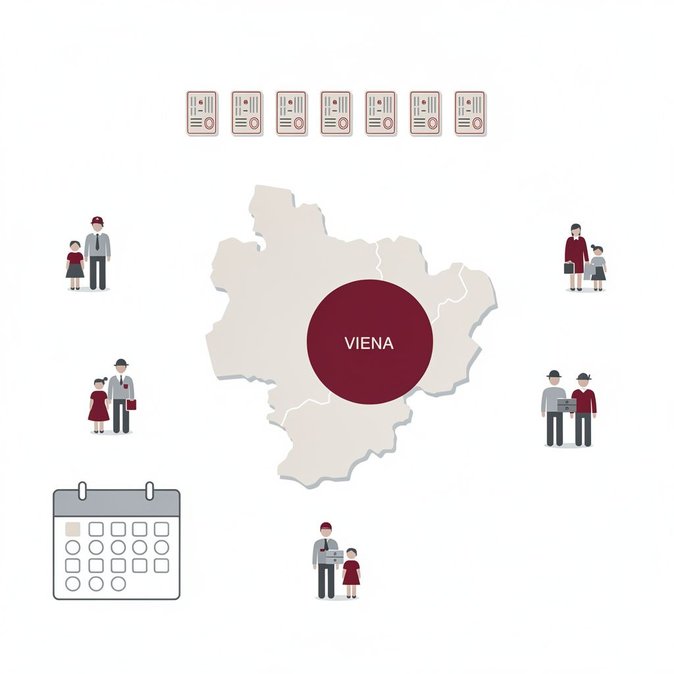
The public-consultation window for Austria’s new Niederlassungsverordnungen (Settlement Decrees) for 2026 and 2027 ended at midnight on 27 November, clearing the way for the coalition government to promulgate the final regulation in early December. The decrees fix the nationwide ceiling for quota-restricted residence titles—including family-reunification permits and certain Red-White-Red Card-Plus conversions—at 5,860 for each year, mirroring the current 2025 level. Under the draft text, Vienna will again receive the lion’s share with 2,939 quota places, followed by Upper Austria (745) and Styria (456). The quotas matter because once a province’s allocation is exhausted, applicants must wait until the following calendar year—even if they already live in Austria—unless they qualify for a quota-exempt category such as an EU Blue Card or standard Red-White-Red Card. Employers planning intra-company transfers of non-EU staff, or family reunifications for key talent, therefore need to time filings carefully. Migration advisers note that Vienna typically burns through its family-reunification quota by late spring. Companies are urged to lodge applications in January, ensure complete documentation and monitor provincial quota dashboards published monthly by the Interior Ministry. The decrees also introduce a small but symbolically important new sub-quota: two permits per province reserved for family members of refugees upgrading to a Red-White-Red Card Plus under § 46a NAG. Integration NGOs welcome the measure but argue that the overall cap fails to reflect Austria’s skills shortages, particularly in tourism and advanced manufacturing. Next steps: the Federal Chancellery will forward the regulation to the National Council’s main committee for a perfunctory endorsement, after which it will be published in the Federal Law Gazette and enter into force the following day. Mobility managers should update forecast models to reflect the unchanged national cap but watch for provincial reallocations that could shift shortly before year-end.
Source: Austrian Interior Ministry (BMI)