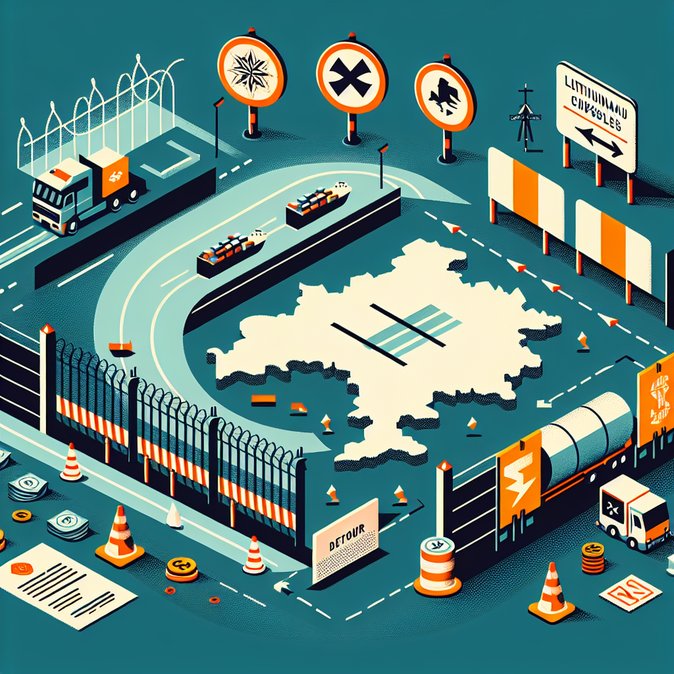
Citing “temporary security reasons” linked to hybrid threats and irregular migration, Poland has suspended traffic through ten land border-crossing points—two with Russia’s Kaliningrad enclave and eight with Belarus. The closures, published late on 6 January and effective immediately, exempt only humanitarian convoys and will be reviewed every 30 days.
Several of the shuttered checkpoints were already operating on reduced hours, but the blanket ban now forces logistics operators to reroute via Lithuanian corridors or the Gdańsk ferry, adding up to 300 km to some journeys. The sole remaining Belarus crossing at Kukuryki–Kozlovichi is running at 150 percent capacity, producing multi-hour queues and higher fuel costs.
![Poland closes ten land crossings with Russia and Belarus, forcing supply-chain detours]()
Insurers have begun levying risk premiums on freight transiting Belarus, costs that will ripple through automotive and retail supply chains in Poland and Germany. Business travellers using company cars must also adjust itineraries: entry will be refused at closed points even with a valid Schengen visa.
Companies are urged to issue updated route guidance, ensure drivers carry documents for alternative crossings, and monitor daily queue times published by the Polish Border Guard. Mobility teams moving staff between Polish and Baltic facilities should also confirm that rerouted drivers meet Lithuanian and Latvian visa and cabotage rules.
Strategically, the closures tighten Warsaw’s hard-line border policy while signalling to Brussels its need for additional EU funding under the SAFE instrument for external-border management.
Several of the shuttered checkpoints were already operating on reduced hours, but the blanket ban now forces logistics operators to reroute via Lithuanian corridors or the Gdańsk ferry, adding up to 300 km to some journeys. The sole remaining Belarus crossing at Kukuryki–Kozlovichi is running at 150 percent capacity, producing multi-hour queues and higher fuel costs.
Insurers have begun levying risk premiums on freight transiting Belarus, costs that will ripple through automotive and retail supply chains in Poland and Germany. Business travellers using company cars must also adjust itineraries: entry will be refused at closed points even with a valid Schengen visa.
Companies are urged to issue updated route guidance, ensure drivers carry documents for alternative crossings, and monitor daily queue times published by the Polish Border Guard. Mobility teams moving staff between Polish and Baltic facilities should also confirm that rerouted drivers meet Lithuanian and Latvian visa and cabotage rules.
Strategically, the closures tighten Warsaw’s hard-line border policy while signalling to Brussels its need for additional EU funding under the SAFE instrument for external-border management.
Source: VisaHQ Global Mobility News
How VisaHQ can help
VisaHQ simplifies the visa application process for individuals and businesses. Check current travel requirements, prepare the required documents and manage your application online through the VisaHQ Poland portal.More From Poland
View all
Poland’s MOS e-portal now mandatory for all residence-permit filings as application fees quadruple

Poland’s new MOS e-portal becomes sole channel for residence-permit filings as government quadruples fees