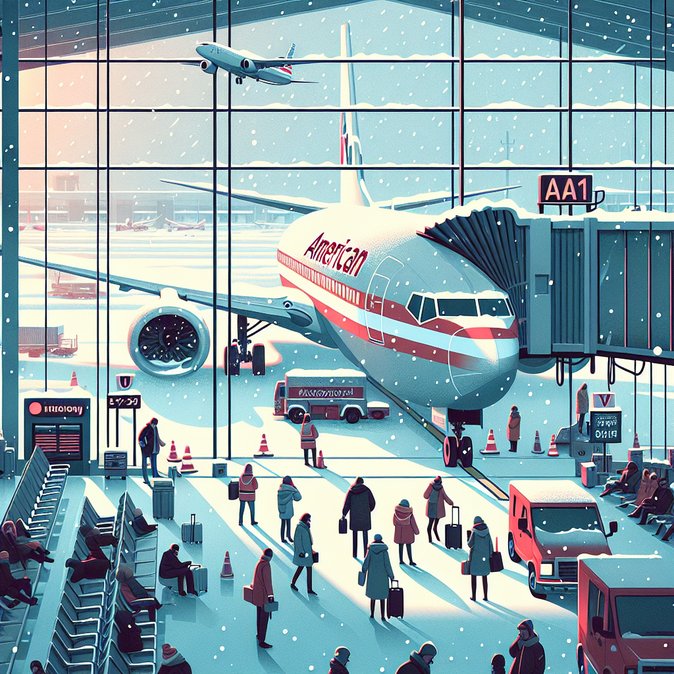
A week after record snowfall and ice crippled large portions of the United States, American Airlines is still cancelling and delaying hundreds of flights, Good Morning America reported on Wednesday, January 28, 2026. At the peak of Winter Storm Fern the carrier scrubbed more than 10,000 departures—the highest weather-related cancellation count in its century-long history—stranding crews and travellers across Dallas/Fort Worth, Charlotte and New York hubs.
As of 4:00 p.m. ET Wednesday, the airline had cancelled 653 flights and delayed another 1,077, according to FlightAware, while offering double-pay incentives to flight attendants and extra compensation to pilots to restore schedules. Gate congestion, frozen de-icing equipment and crew-rest violations compounded the operational spiral. Competitors United and Delta registered fewer than 30 cancellations each, underscoring the outsized impact on American’s network.
![Winter-storm fallout snarls American Airlines network, illustrating climate-related mobility risk]()
For corporate mobility managers the episode highlights increasing climate-resilience challenges. Critical implications include: • heightened risk that employees will fall out of lawful status if visa-renewal trips are disrupted; • missed consular appointments that can push start dates into the next fiscal year; • cascading hotel-and-per-diem costs during extended layovers; • difficulty repositioning expatriates when private-jet charters face their own de-icing bottlenecks and slot constraints.
Travel-policy experts recommend that companies add force-majeure language to assignment letters, budget for emergency accommodation and negotiate refundable-fare contracts with preferred carriers. They also advise using airline mobile apps to rebook proactively and—where feasible—routing critical staff through southern airports less prone to snow- and ice-related closures.
American says it has now restored the “vast majority” of its schedule and extended fee-free itinerary changes through January 29, but the carrier warned that additional mechanical delays are possible as jets cycle back into maintenance rotations. Travellers should check flight status frequently and retain boarding-pass copies for duty-of-care audits.
As of 4:00 p.m. ET Wednesday, the airline had cancelled 653 flights and delayed another 1,077, according to FlightAware, while offering double-pay incentives to flight attendants and extra compensation to pilots to restore schedules. Gate congestion, frozen de-icing equipment and crew-rest violations compounded the operational spiral. Competitors United and Delta registered fewer than 30 cancellations each, underscoring the outsized impact on American’s network.

For corporate mobility managers the episode highlights increasing climate-resilience challenges. Critical implications include: • heightened risk that employees will fall out of lawful status if visa-renewal trips are disrupted; • missed consular appointments that can push start dates into the next fiscal year; • cascading hotel-and-per-diem costs during extended layovers; • difficulty repositioning expatriates when private-jet charters face their own de-icing bottlenecks and slot constraints.
Travel-policy experts recommend that companies add force-majeure language to assignment letters, budget for emergency accommodation and negotiate refundable-fare contracts with preferred carriers. They also advise using airline mobile apps to rebook proactively and—where feasible—routing critical staff through southern airports less prone to snow- and ice-related closures.
American says it has now restored the “vast majority” of its schedule and extended fee-free itinerary changes through January 29, but the carrier warned that additional mechanical delays are possible as jets cycle back into maintenance rotations. Travellers should check flight status frequently and retain boarding-pass copies for duty-of-care audits.
Source: ABC News / Good Morning America