The European Commission’s Directorate-General for Migration and Home Affairs released a plain-language guide on 29 January explaining how the new Entry/Exit System (EES) and the European Travel Information and Authorisation System (ETIAS) will work together when they become mandatory across the Schengen Area by 10 April 2026.
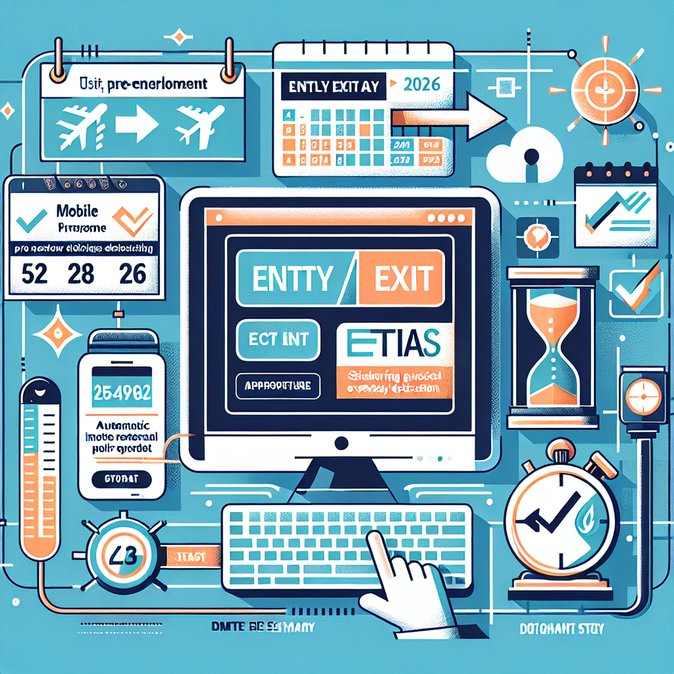
Under EES, non-EU passport holders—including business travellers entering Poland via Warsaw-Chopin Airport or the land borders with Ukraine and Belarus—will have their biometric data captured and entry/exit movements recorded automatically, replacing manual passport stamping. ETIAS, by contrast, is a pre-travel authorisation that visa-exempt visitors will need to obtain online for a €7 fee and link to their passport.
![EU publishes traveller guide comparing Entry/Exit System and ETIAS ahead of April rollout at Polish borders]()
The guide confirms that Poland will deploy the “Travel to Europe” mobile pre-registration app, allowing frequent visitors to upload fingerprints and facial images up to 72 hours before arrival and thereby cut e-gate processing times. Polish Border Guard trials at Chopin and Kraków airports have shown average clearance times fall from 104 seconds to 38 seconds when travellers pre-enrol.
For employers seconding staff to Poland or operating shuttle rotations across the external EU border, the biggest operational change will be the strict enforcement of the 90/180-day stay rule, as EES will flag overstays automatically. Immigration advisers recommend auditing all non-EU assignees’ travel histories before April and updating HRIS systems to receive EES alerts.
The Commission says it will run an EU-wide information campaign in multiple languages from February and is working with airlines—including LOT—so that carriers can verify ETIAS approvals at check-in using existing Advance Passenger Information (API) channels.
Under EES, non-EU passport holders—including business travellers entering Poland via Warsaw-Chopin Airport or the land borders with Ukraine and Belarus—will have their biometric data captured and entry/exit movements recorded automatically, replacing manual passport stamping. ETIAS, by contrast, is a pre-travel authorisation that visa-exempt visitors will need to obtain online for a €7 fee and link to their passport.

The guide confirms that Poland will deploy the “Travel to Europe” mobile pre-registration app, allowing frequent visitors to upload fingerprints and facial images up to 72 hours before arrival and thereby cut e-gate processing times. Polish Border Guard trials at Chopin and Kraków airports have shown average clearance times fall from 104 seconds to 38 seconds when travellers pre-enrol.
For employers seconding staff to Poland or operating shuttle rotations across the external EU border, the biggest operational change will be the strict enforcement of the 90/180-day stay rule, as EES will flag overstays automatically. Immigration advisers recommend auditing all non-EU assignees’ travel histories before April and updating HRIS systems to receive EES alerts.
The Commission says it will run an EU-wide information campaign in multiple languages from February and is working with airlines—including LOT—so that carriers can verify ETIAS approvals at check-in using existing Advance Passenger Information (API) channels.
Source: European Commission – DG HOME