In a major policy move on 2 February 2026, the European Commission adopted its first EU-wide Visa Strategy, a new European Asylum and Migration Management Strategy, and a Recommendation on Attracting Talent for Innovation. Although the documents are addressed to all 27 member states, they will have an outsized impact on Germany, which issued almost 2 million Schengen visas and some 370 000 national visas in 2025 alone.
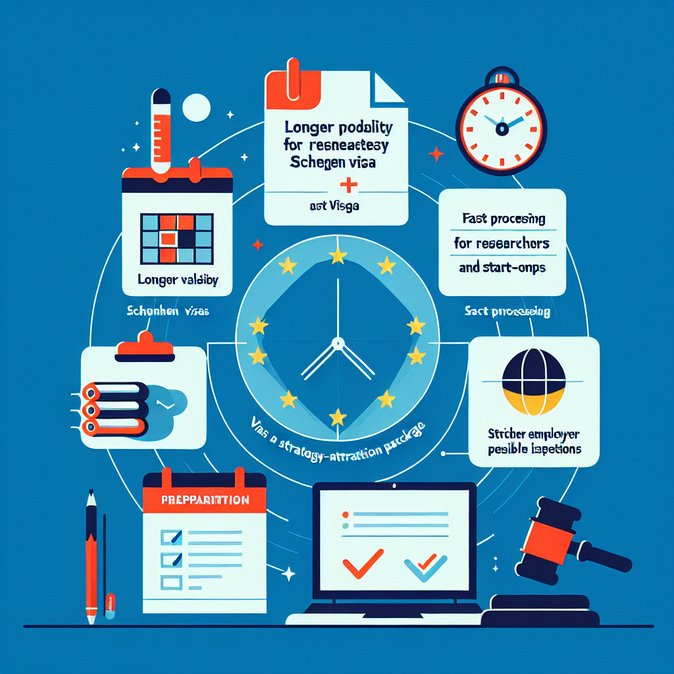
The Visa Strategy calls for longer-validity multiple-entry visas for ‘trusted business travellers’, the creation of European Legal Gateway Offices to guide employers and foreign talent, and a review of the 90/180-day rule for categories such as touring artists, athletes and cross-border project experts. A pilot Legal Gateway office will open in India later this year, with information-technology engineers and consultants as the first target group. German companies—particularly Mittelstand manufacturers that rely on short-term specialists—stand to gain from the proposed relaxation; the German Chambers of Commerce and Industry (DIHK) have already urged Berlin to volunteer as one of the test locations for a second Gateway office.
![EU adopts first-ever Visa Strategy and talent-attraction roadmap—Germany prepares to overhaul procedures]()
For corporate mobility managers, the most immediate change lies in the recommended 30-day processing target for researcher, STEM, start-up-founder and innovative-entrepreneur residence permits. The recommendation is not yet legally binding, but the Federal Foreign Office confirmed to industry associations that it will adjust internal key-performance indicators for its 200-plus visa sections worldwide in anticipation of an eventual legislative mandate. The Ministry of the Interior is likewise mapping the EU proposals against Germany’s new Skilled-Worker Immigration Act, which came into force last November and already allows accelerated (‘Express-verfahren’) appointments for recognised sponsors.
Compliance pressures will tighten in parallel. Brussels intends to strengthen the Employers Sanctions Directive, increasing workplace inspections and penalties for illegal employment. German employers with recognised-sponsor status could enjoy reduced paperwork yet face random audits to confirm that salary, job-title and work-location data match the approved terms. Immigration advisers therefore recommend that companies build audit-ready digital files and rehearse inspection scenarios with local works councils.
Implementation is staggered. Some measures—such as the talent-attraction Recommendation—can take effect as soon as member states update administrative guidelines. Others, including new restrictions on visas in response to hostile third-country acts, require amendments to the EU Visa Code and could take several years. Still, the direction of travel is clear: more digitalisation, faster processing for bona-fide travellers, and tougher enforcement where abuses occur. For Germany’s globally mobile workforce and the HR teams that support them, 2026 is shaping up to be a watershed year.
The Visa Strategy calls for longer-validity multiple-entry visas for ‘trusted business travellers’, the creation of European Legal Gateway Offices to guide employers and foreign talent, and a review of the 90/180-day rule for categories such as touring artists, athletes and cross-border project experts. A pilot Legal Gateway office will open in India later this year, with information-technology engineers and consultants as the first target group. German companies—particularly Mittelstand manufacturers that rely on short-term specialists—stand to gain from the proposed relaxation; the German Chambers of Commerce and Industry (DIHK) have already urged Berlin to volunteer as one of the test locations for a second Gateway office.

For corporate mobility managers, the most immediate change lies in the recommended 30-day processing target for researcher, STEM, start-up-founder and innovative-entrepreneur residence permits. The recommendation is not yet legally binding, but the Federal Foreign Office confirmed to industry associations that it will adjust internal key-performance indicators for its 200-plus visa sections worldwide in anticipation of an eventual legislative mandate. The Ministry of the Interior is likewise mapping the EU proposals against Germany’s new Skilled-Worker Immigration Act, which came into force last November and already allows accelerated (‘Express-verfahren’) appointments for recognised sponsors.
Compliance pressures will tighten in parallel. Brussels intends to strengthen the Employers Sanctions Directive, increasing workplace inspections and penalties for illegal employment. German employers with recognised-sponsor status could enjoy reduced paperwork yet face random audits to confirm that salary, job-title and work-location data match the approved terms. Immigration advisers therefore recommend that companies build audit-ready digital files and rehearse inspection scenarios with local works councils.
Implementation is staggered. Some measures—such as the talent-attraction Recommendation—can take effect as soon as member states update administrative guidelines. Others, including new restrictions on visas in response to hostile third-country acts, require amendments to the EU Visa Code and could take several years. Still, the direction of travel is clear: more digitalisation, faster processing for bona-fide travellers, and tougher enforcement where abuses occur. For Germany’s globally mobile workforce and the HR teams that support them, 2026 is shaping up to be a watershed year.
Source: Fragomen Immigration Alert