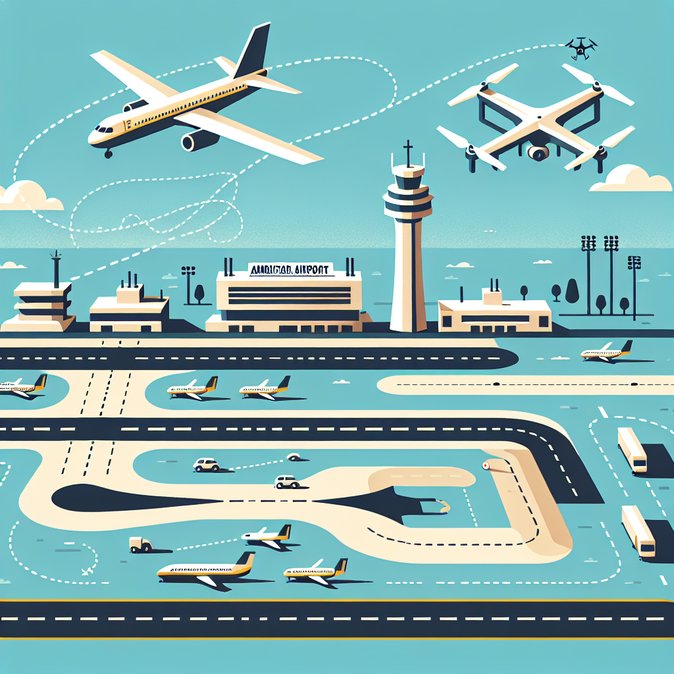
Operations at Sri Guru Ram Das Ji International Airport, Amritsar, were briefly disrupted in the early hours of 8 February after pilots reported an unidentified drone near the runway. Air-traffic controllers shut the airspace for roughly one hour, forcing two incoming international services to divert to Delhi and Chandigarh.
A high-level joint meeting of the Airports Authority of India, Central Industrial Security Force and the Indian Air Force reviewed surveillance footage and tightened the perimeter response plan. While police believe the device may have been launched during a nearby wedding, investigators have not ruled out cross-border reconnaissance – Pakistan’s border lies less than 30 kilometres away.
![Drone scare diverts flights at Amritsar; security protocol overhauled]()
The incident renews concerns for airlines operating from Punjab’s busiest international gateway for diaspora traffic. Carriers flying the high-density Amritsar–Dubai and Amritsar–Toronto sectors have asked for real-time NOTAM (Notice to Airmen) updates and are reassessing insurance coverage for drone-related disruptions.
From a mobility-risk standpoint, companies moving personnel through Amritsar should build in buffer time and monitor advisories. The Bureau of Civil Aviation Security is expected to issue fresh guidelines on geofencing and mandatory anti-drone systems – costs likely to be passed on through higher user fees.
Longer term, the episode may accelerate plans to install counter-UAV jammers at other tier-2 airports, extending security requirements that Delhi and Mumbai already follow.
A high-level joint meeting of the Airports Authority of India, Central Industrial Security Force and the Indian Air Force reviewed surveillance footage and tightened the perimeter response plan. While police believe the device may have been launched during a nearby wedding, investigators have not ruled out cross-border reconnaissance – Pakistan’s border lies less than 30 kilometres away.
The incident renews concerns for airlines operating from Punjab’s busiest international gateway for diaspora traffic. Carriers flying the high-density Amritsar–Dubai and Amritsar–Toronto sectors have asked for real-time NOTAM (Notice to Airmen) updates and are reassessing insurance coverage for drone-related disruptions.
From a mobility-risk standpoint, companies moving personnel through Amritsar should build in buffer time and monitor advisories. The Bureau of Civil Aviation Security is expected to issue fresh guidelines on geofencing and mandatory anti-drone systems – costs likely to be passed on through higher user fees.
Longer term, the episode may accelerate plans to install counter-UAV jammers at other tier-2 airports, extending security requirements that Delhi and Mumbai already follow.
Source: The Times of India