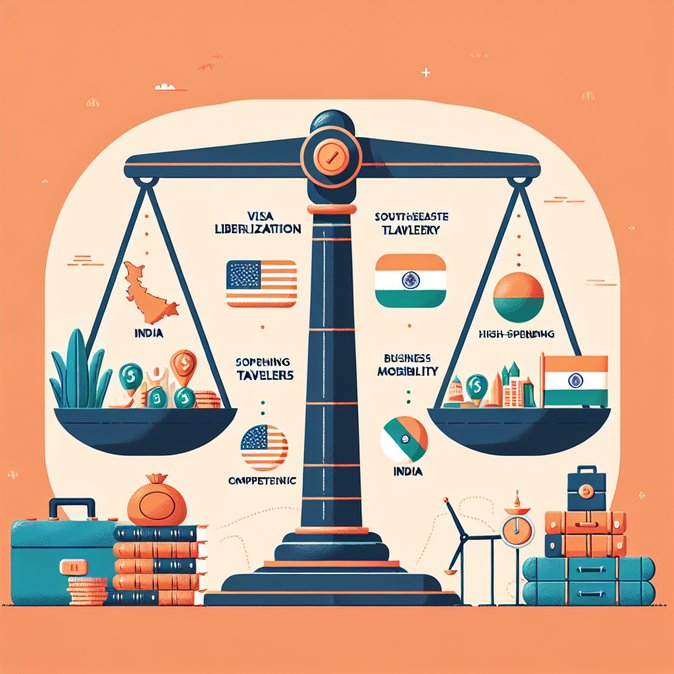
Writing in the Financial Express on 8 May 2026, policy analysts Pradeep S. Mehta and Madhvendra Singh Panwar argue that India must treat visa liberalisation as core economic strategy, not mere administrative reform. Despite expanding its e-Visa regime to 160 nationalities, India still attracts only 20–22 million foreign tourist arrivals annually, capturing 1.5 % of the global market. The authors note that competitors such as Thailand and Indonesia combine visa-free access with strong destination branding, attracting 35–40 million visitors and far higher per-capita spending. They cite UN Tourism data showing that easing visa rules can lift arrivals by 5–25 % and stress that foreign tourists typically spend two-to-four times more than domestic travellers, generating jobs in hospitality, transport and retail. Recommended measures include expanding visa-on-arrival to key G20 markets, offering multi-entry visas of up to five years for high-yield segments such as conferences and medical travel, and integrating AI-based risk analytics to allay security concerns. A strategic visa-yield approach, they contend, could dovetail with India’s IVFRT digital upgrades and the new e-Arrival Card, enabling friction-less yet secure entry. For global-mobility stakeholders, the opinion underscores the link between tourism policy and broader people-movement. Easier tourist- and conference-visa regimes lower entry barriers not only for leisure visitors but also for short-term business travellers, consultants and event organisers, supporting India’s ambition to become a top MICE destination and regional headquarters hub. While not an official policy announcement, the article reflects growing domestic pressure on the government to match infrastructure investments with aggressive openness – a debate corporate travel departments and relocation firms should monitor ahead of the 2026–27 budget cycle.
Source: The Financial Express