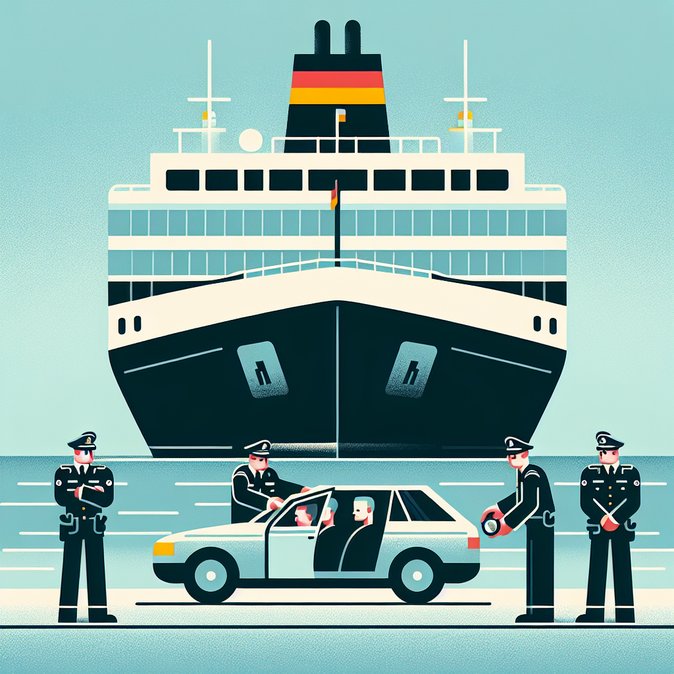
Border officers at Rostock seaport uncovered a suspected human-smuggling operation on 11 May, the Bundespolizeiinspektion Rostock confirmed the next morning. A 55-year-old Iranian driver arriving on a Sweden–Germany ferry produced only a driving licence; a search of his vehicle revealed four additional Iranian nationals aged 25–50, none holding valid travel documents. Two passengers were already listed in the Schengen Information System for return decisions. All five individuals now face criminal proceedings for unauthorised entry; the driver is also under investigation for organised facilitation. The passengers have lodged asylum claims and were transferred to state reception facilities. The incident highlights the Baltic Sea ferry corridor as an increasingly favoured route for irregular movement after Denmark re-imposed land-border checks earlier in the day. Companies moving staff or cargo through Rostock, Travemünde or Kiel should expect intensified spot inspections, which can delay roll-on/roll-off shipments. Logistics managers are advised to verify that third-country drivers on Swedish or Finnish contracts carry passports and, where required, residence permits for every Schengen leg. Maritime insurers warn that carriers could face facilitation fines if stowaways or improperly documented passengers are discovered on arrival, mirroring penalties long applied to airlines.