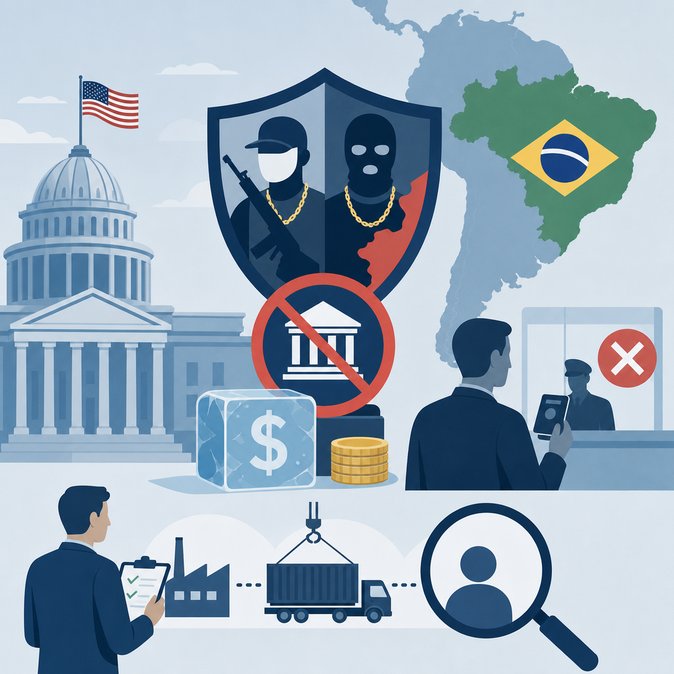
In a move with far-reaching mobility consequences, the United States on Monday afternoon (1 June, 16:24 Brasília time) officially added Brazil’s two largest criminal factions—Primeiro Comando da Capital (PCC) and Comando Vermelho (CV)—to its Foreign Terrorist Organisation (FTO) list under Section 219 of the Immigration and Nationality Act. The designations, which take legal effect on 5 June, authorise the State Department and the Department of Homeland Security to freeze US-based assets and to deny or revoke visas of individuals deemed to support the groups. While the vast majority of Brazilian nationals will see no change, mobility lawyers warn that anyone flagged by US consular systems for even peripheral links—family ties, former neighbourhoods or social-media contacts—could face additional screening, request-for-evidence delays or outright refusal. Companies employing large numbers of subcontracted logistics or construction staff in São Paulo, Rio de Janeiro and the Centro-Oeste should anticipate longer lead times for L-1, H-1B and B-1/B-2 visas as algorithms recalibrate risk profiles. The Brazilian government publicly criticised the decision, calling it a violation of sovereignty that could “hamper ongoing police cooperation”. Behind the scenes, however, Brasília is scrambling to map employees in sensitive supply-chains—especially port security and agribusiness—whose US travel may be jeopardised. Experts also note that the terrorist label triggers Treasury Department secondary sanctions, meaning US banks must block transactions even when parties are only indirectly linked to PCC or CV. Multinationals may therefore confront KYC alerts when reimbursing vendor invoices or paying per-diem to travelling technicians. Practical guidance: audit travel rosters for staff who reside in PCC/CV-controlled districts; build two extra weeks into visa-appointment timelines; and advise Brazilian passport-holders transiting the US en-route to Canada or Mexico that ESTA or C1/D crew visas could be queried. Similar designations of Mexican cartels in 2024 initially produced denial spikes before systems stabilised six months later—HR and global-mobility teams should prepare for a comparable bedding-in period.
Source: Agência Brasil