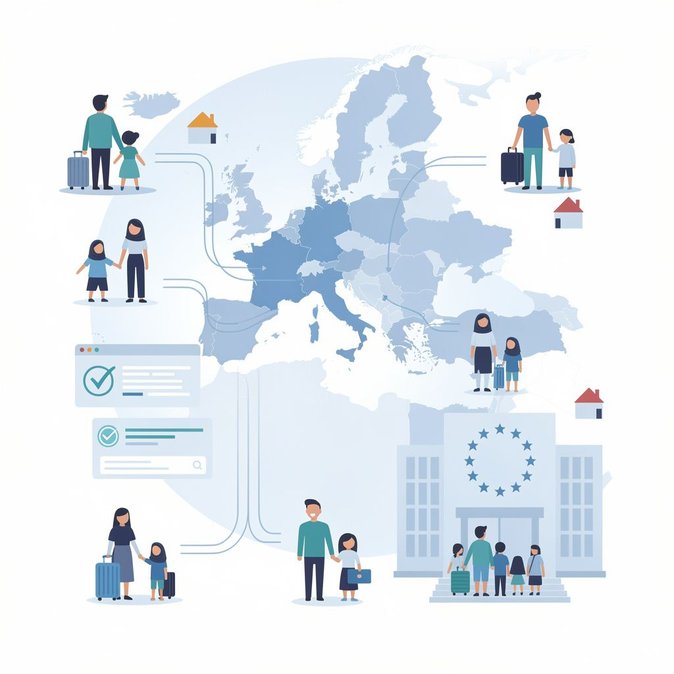
Austria’s Ministry of the Interior used a 12 June press conference to present the country’s first security budget since the EU Pact on Migration and Asylum entered into force the same day. The double-year budget earmarks €4.09 billion for 2027 and €4.1 billion for 2028, preserving head-count for 1 400 new police recruits a year and financing modern equipment, terrorism prevention and cyber-security upgrades. Interior Minister Gerhard Karner framed the spending plan as a twin strategy: “investment in security, savings in asylum.” Officials highlighted that irregular arrivals on Austria’s eastern borders have fallen to historic lows—15 detections last week in Burgenland—allowing the asylum and integration envelope to be cut by roughly 20 percent. More significant for global-mobility managers is how Vienna intends to operationalise the EU Pact’s three pillars—screening at external borders, accelerated procedures for manifestly unfounded claims, and tougher return rules. Vienna International Airport (VIE) will pilot “border-procedure zones” where non-EU nationals with weak protection prospects are processed before entry, mirroring plans at land crossings with Hungary and Slovenia. The ministry confirmed that family-reunification quotas—already reduced from 613 arrivals (Jan–May 2025) to 47 (same period 2026)—will be capped in law, and that residence-condition sanctions will tighten for migrants who do not cooperate with return counselling. While business travellers remain exempt from most asylum-related checks, companies relocating staff should expect more robust ID verifications at airports and longer lead times for dependants’ permits. For multinational HR teams, the message is mixed: a leaner asylum system may free administrative capacity for work-permit processing, but stepped-up biometrics (Eurodac now captures fingerprints from age six) and stricter address-registration rules will require closer compliance monitoring. Experts advise budgeting extra time for work-permit appointments in Q3 as migration officers are reassigned to Pact training.