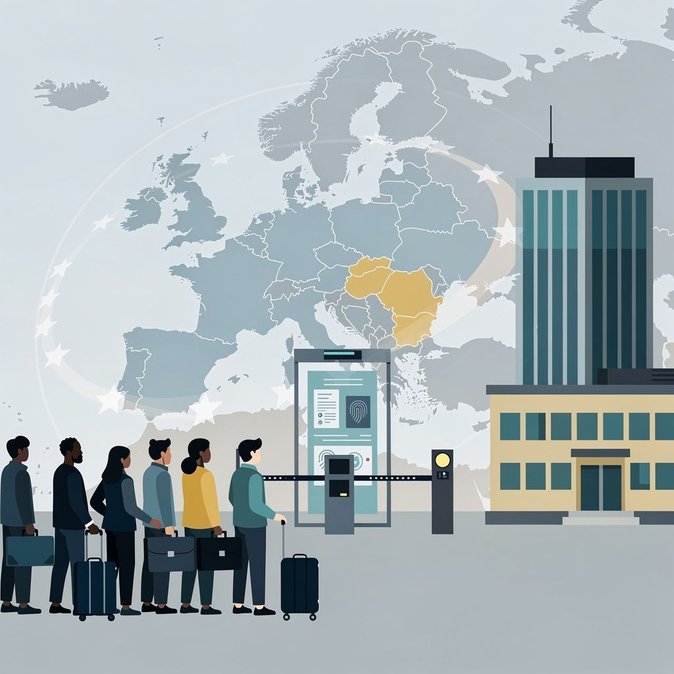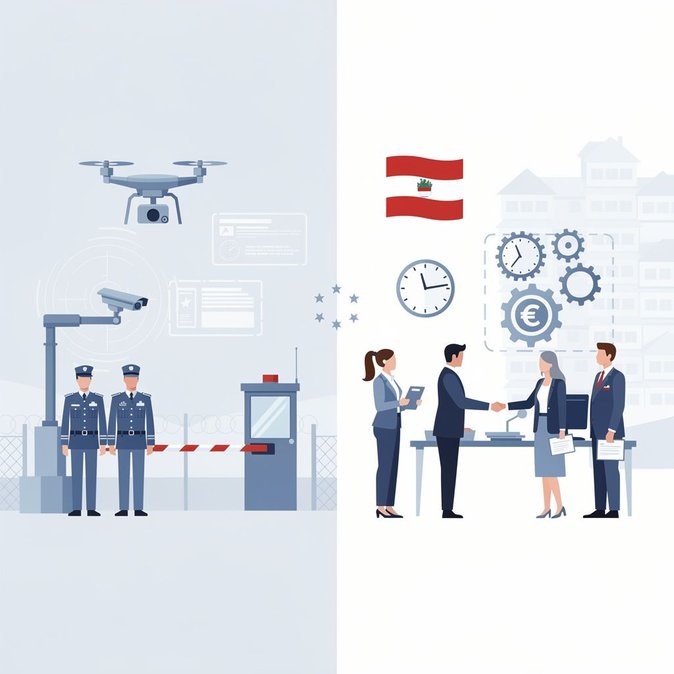
Speaking in Vienna just hours after the EU asylum overhaul took effect, Interior Minister Gerhard Karner unveiled a two-year «security budget» of €4.1 billion per annum, pledging to “invest in safety while saving on asylum”. The press conference highlighted how Austria intends to fund 2,300 additional border-police posts, upgrade thermal-camera drones along the Hungarian frontier and expand the EES kiosk fleet at Vienna airport – costs the ministry says will be offset by quicker returns and shorter accommodation periods under the new EU rules. Karner stressed that the budget ring-fences money for corporate mobility too: €35 million are earmarked for speeding up Red-White-Red Card processing at the Bundesamt für Fremdenwesen und Asyl, with a target of bringing average decision time from 8 to 5 weeks. “Austria must remain attractive for qualified workers even as we close loopholes for irregular migration,” he noted. The ministry projects a €120 million reduction in asylum-housing expenditure by 2027 thanks to GEAS border procedures that allow certain claims to be decided within 12 weeks. Savings will partly finance new cyber-forensics labs used to crack forged travel documents – a growing problem on routes through the Western Balkans. Industry organisations welcomed faster work-permit processing but cautioned against staff shortages at provincial police directorates that issue residence cards. The Austrian Federal Economic Chamber urged the government to reinvest any additional savings into digitising immigration case files to cut in-person appointments. For global-mobility managers, the headline is clear: budget priorities are shifting from reception to enforcement and efficiency. Companies should monitor whether promised staffing boosts translate into faster permit approvals during the second half of 2026.