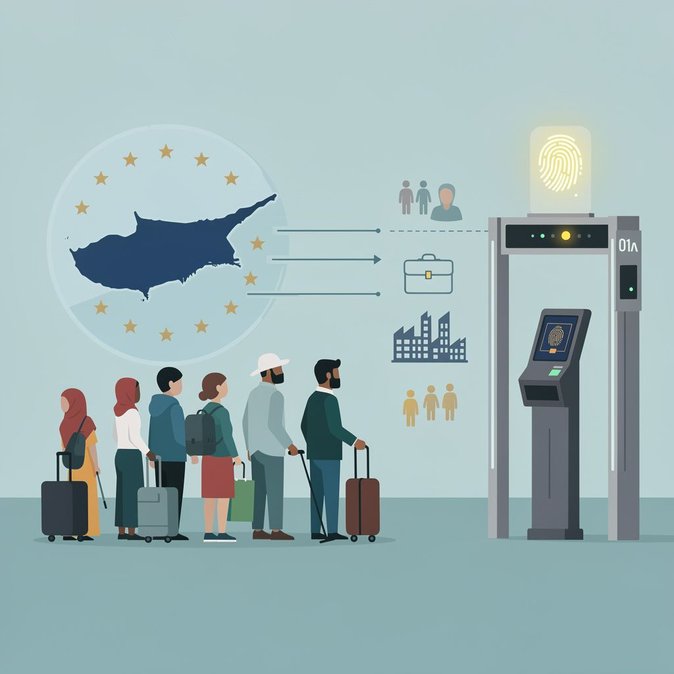
Ahead of the pact’s launch, Cypriot outlet Politis published a detailed explainer outlining how border procedures will change from 12 June. All non-EU nationals arriving irregularly—including those intercepted off the island’s south-east coast—now undergo a mandatory security and vulnerability screening lasting up to seven days. The process captures fingerprints, facial images and travel-document scans that feed into Eurodac and Interpol databases. Applicants deemed to have little chance of protection face an accelerated asylum decision within 12 weeks, after which Cyprus can issue a return order. The reforms also shorten appeal deadlines and standardise reception-centre conditions across the EU. Importantly for multinationals, asylum seekers will be able to access the Cypriot labour market six months after lodging an application, down from nine, potentially enlarging the pool of legal workers. However, stricter rules on secondary movement mean refugees transferred to Cyprus under relocation schemes must remain there for at least three years before obtaining travel documents for other EU jobs. Politis notes that Cyprus has already adapted its Refugee Law and installed new biometric kiosks at Larnaca and Paphos airports. Transport operators have been briefed on advance passenger-data obligations, and the Migration Ministry is hiring 120 additional officers to handle the new workloads. Travellers with corporate passports or diplomatic status are unaffected, but irregular arrivals—including family members of expatriates—should expect more intensive checks. Relocation coordinators are advised to keep copies of the new screening flowchart and to inform assignees about the possibility of short-term detention during the initial health-and-security triage.
Source: Politis