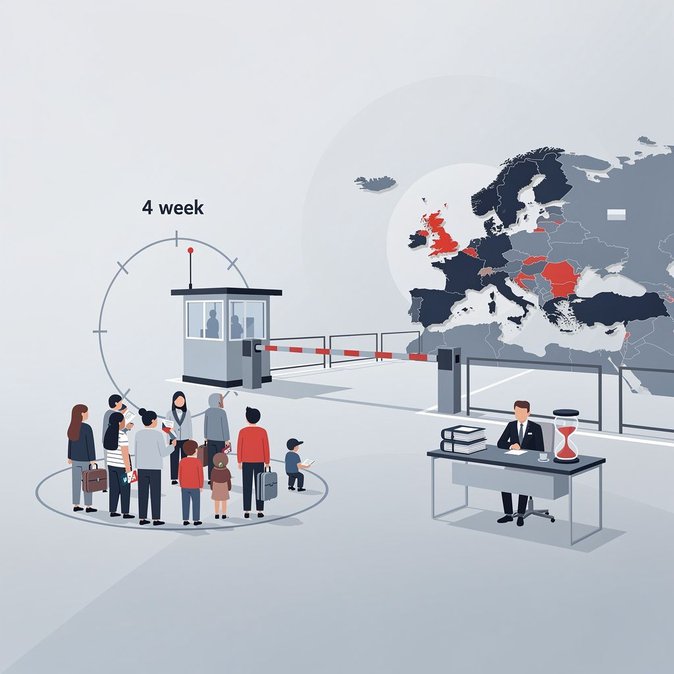
A sweeping amendment to the Czech Asylum Act entered into force on 12 June 2026, aligning national rules with the EU Pact on Migration and Asylum and introducing the country’s most significant procedural overhaul in two decades. Under the new law, applications lodged at the external Schengen border must be decided within four weeks – or six weeks when the EU activates its Crisis Regulation – compared with the previous 90-day limit.
If you’re trying to understand the wider landscape of Czech entry rules—be it for refugee protection, work, study, or simple tourism—VisaHQ offers a convenient starting point. Their dedicated Czech Republic page (https://www.visahq.com/czech-republic/) bundles the latest visa policies, document checklists, and step-by-step guidance, and their experts can advise on transitions between different stay categories once an asylum application is resolved.
The amendment also creates an explicit Union-wide list of “safe countries of origin”, enabling fast-track refusals where claims are deemed manifestly unfounded. For employers, a key change is the possibility to issue exit orders electronically, removing administrative barriers for failed applicants wishing to take up a work-permit option in another EU state. Reception-centre rules have likewise been tightened: asylum seekers must remain in the assigned facility for the first ten days (previously five) while security and health checks are completed, but thereafter gain broader access to labour-market activation schemes run by the Labour Office. The Interior Ministry estimates the reforms will reduce average processing costs by 20 % and free up 300 staff positions that can be redeployed to long-term residence and business-visa units. Industry associations welcome the accelerated timelines, arguing that faster first-instance decisions provide greater certainty for companies hiring refugees under the “key workers” and “qualified employees” government programmes. NGOs, however, caution that the compressed deadlines risk procedural errors and have called for expanded legal-aid funding, which the Senate will debate next week.

If you’re trying to understand the wider landscape of Czech entry rules—be it for refugee protection, work, study, or simple tourism—VisaHQ offers a convenient starting point. Their dedicated Czech Republic page (https://www.visahq.com/czech-republic/) bundles the latest visa policies, document checklists, and step-by-step guidance, and their experts can advise on transitions between different stay categories once an asylum application is resolved.
The amendment also creates an explicit Union-wide list of “safe countries of origin”, enabling fast-track refusals where claims are deemed manifestly unfounded. For employers, a key change is the possibility to issue exit orders electronically, removing administrative barriers for failed applicants wishing to take up a work-permit option in another EU state. Reception-centre rules have likewise been tightened: asylum seekers must remain in the assigned facility for the first ten days (previously five) while security and health checks are completed, but thereafter gain broader access to labour-market activation schemes run by the Labour Office. The Interior Ministry estimates the reforms will reduce average processing costs by 20 % and free up 300 staff positions that can be redeployed to long-term residence and business-visa units. Industry associations welcome the accelerated timelines, arguing that faster first-instance decisions provide greater certainty for companies hiring refugees under the “key workers” and “qualified employees” government programmes. NGOs, however, caution that the compressed deadlines risk procedural errors and have called for expanded legal-aid funding, which the Senate will debate next week.