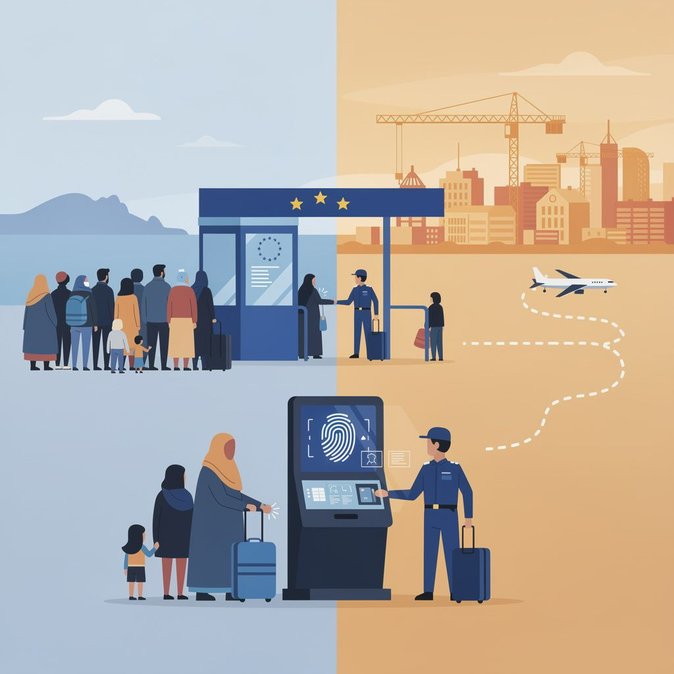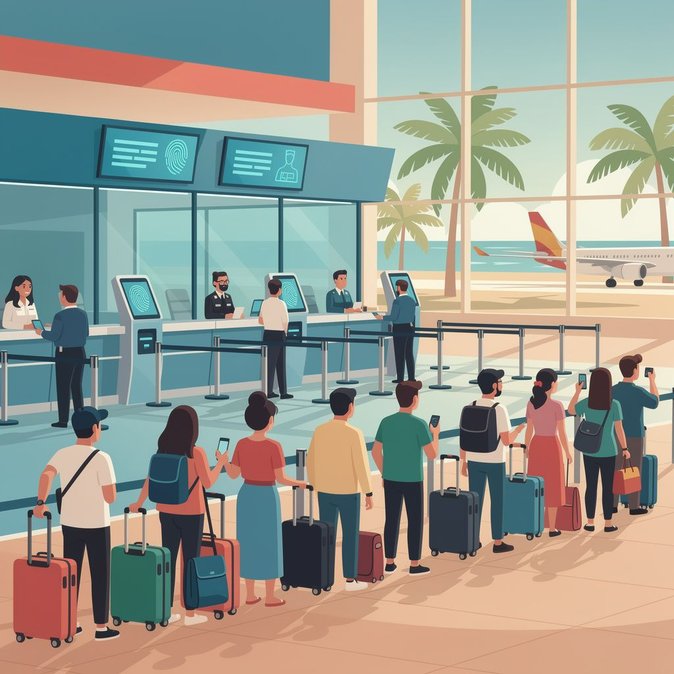
Just two months after the EU’s biometric Entry/Exit System (EES) went live, airports in Spain’s Balearic Islands are already buckling under the additional checks, with travellers reporting waits of up to three hours. A Frontex official quoted this week warned that stabilising the system across Europe could take “one to two years.” Under EES, all non-EU visitors must provide fingerprints and facial scans on first entry, a process intended to speed repeat crossings but which is still plagued by software glitches and inconsistent officer training.
Travellers who want to stay ahead of the curve can turn to VisaHQ, whose platform (https://www.visahq.com/spain/) monitors the latest Spanish border protocols and offers personalised documentation support; leveraging their service before departure can shave precious minutes off airport formalities and flag any special EES prerequisites.
Palma, Ibiza and Mahón airports—gateways for 28 million tourists annually—have become early flashpoints, prompting Spain’s tourism industry to sound the alarm. Airlines have lobbied Madrid for temporary staffing surges and more e-gates before the July rush. The government responded by authorising overtime for Policía Nacional officers but stressed that the biometric capture is an EU mandate it cannot waive. Some carriers are advising passengers to arrive at least four hours before departure, a recommendation that could ripple through hotel checkout times and ground-transport schedules. For corporates, the queues translate into missed meetings, higher duty-of-care costs and potential itinerary re-writes. Mobility teams should pre-enrol executive travellers in fast-track services where available and build contingency time into schedules when routing through Spain’s island airports. While the EES promises long-term benefits—automated over-stay alerts and interoperable data for work-permit vetting—the immediate reality is operational pain. Industry bodies warn that unless bottlenecks ease by August, Spain risks losing high-value conference and incentive business to easier-entry competitors such as Türkiye and the UAE.
Travellers who want to stay ahead of the curve can turn to VisaHQ, whose platform (https://www.visahq.com/spain/) monitors the latest Spanish border protocols and offers personalised documentation support; leveraging their service before departure can shave precious minutes off airport formalities and flag any special EES prerequisites.
Palma, Ibiza and Mahón airports—gateways for 28 million tourists annually—have become early flashpoints, prompting Spain’s tourism industry to sound the alarm. Airlines have lobbied Madrid for temporary staffing surges and more e-gates before the July rush. The government responded by authorising overtime for Policía Nacional officers but stressed that the biometric capture is an EU mandate it cannot waive. Some carriers are advising passengers to arrive at least four hours before departure, a recommendation that could ripple through hotel checkout times and ground-transport schedules. For corporates, the queues translate into missed meetings, higher duty-of-care costs and potential itinerary re-writes. Mobility teams should pre-enrol executive travellers in fast-track services where available and build contingency time into schedules when routing through Spain’s island airports. While the EES promises long-term benefits—automated over-stay alerts and interoperable data for work-permit vetting—the immediate reality is operational pain. Industry bodies warn that unless bottlenecks ease by August, Spain risks losing high-value conference and incentive business to easier-entry competitors such as Türkiye and the UAE.