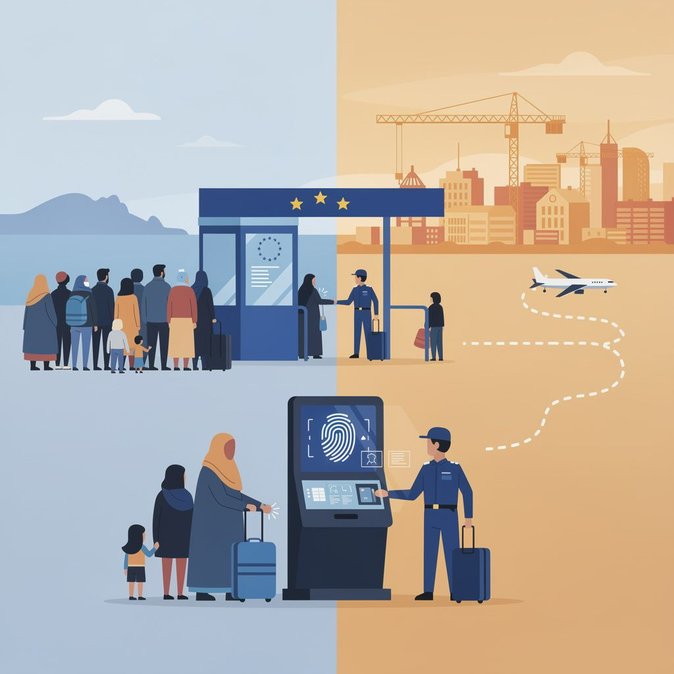
From the first flight that landed in Barajas on the morning of 12 June, Spain officially began operating under the European Union’s new Pact on Migration and Asylum. The regulation package—described by Brussels as “effective, fair and firm”—introduces mandatory biometric screening of all irregular entrants, accelerated border-side asylum decisions and a solidarity mechanism that lets other member states pay or take in people to help front-line countries. For Spain, the most immediate change is the roll-out of a seven-day “screening” protocol (reduced to 72 hours at Spanish borders) that captures fingerprints and facial images of migrants aged six and above and checks them against Eurodac and security databases. Applicants judged to have a low chance of protection—because they come from countries with EU-wide recognition rates below 20 %—will be channelled into an accelerated 12-week border procedure. The Interior Ministry has set aside 10 000 places in existing reception centres and trained additional judges to cope with the new deadlines. Financially, Madrid will contribute about €42 million this year to the pact’s solidarity pool, but it will also be eligible for EU funding to train adjudicators and reinforce facilities in the Canary Islands and at the land borders with Morocco. Officials insist that Spain will continue to provide legal aid and UNHCR access for all applicants, positioning itself as a “guarantor state” even as the overall EU model shifts toward a tougher stance on returns. For global-mobility and HR teams the message is mixed. The pact should shorten backlogs for bona-fide corporate transferees who arrive irregularly (for example, accompanying family members who lack the right visa), but it will also subject them to biometric screening and, potentially, detention-like holding areas until initial decisions are reached. Companies are advised to review contingency plans for assignees transiting through North Africa or using humanitarian pathways. Legal counsel in Spain warns that the definition of a “safe third country” is now broader, so employees could be redirected to transit states if documentation is incomplete. In the coming weeks Spain will publish detailed implementing instructions. Mobility managers should monitor the Official State Gazette and be prepared to update assignment timelines, as inadmissibility and return decisions could be issued much faster than under the previous regime.