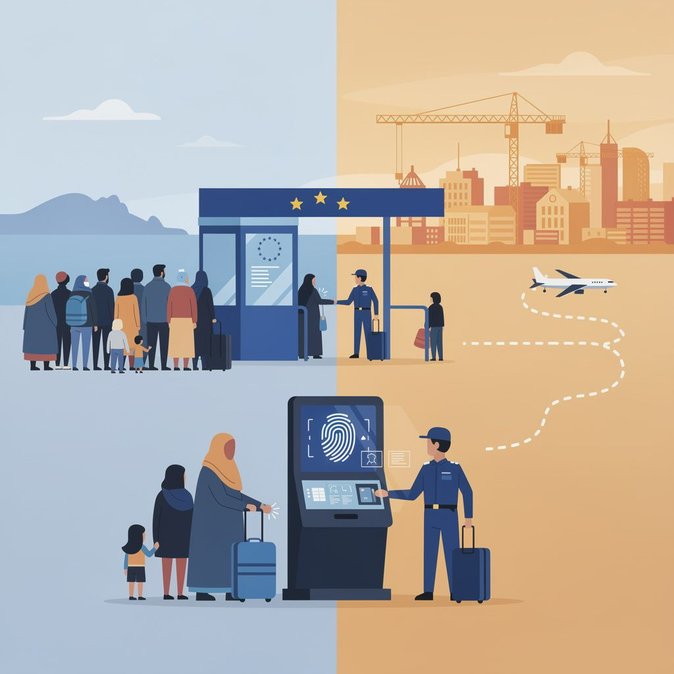
With immediate effect from 12 June, Spain will no longer grant or renew one-year humanitarian residence permits that have been widely used by Venezuelan nationals whose asylum applications were rejected. An Interior Ministry circular, seen by Europa Press, says the category—created in 2019—now risks ‘confusion’ with EU-level protection statuses under the new Migration and Asylum Pact and must therefore be phased out. Until now, Spain issued tens of thousands of humanitarian cards annually, giving holders the right to work, access public health care and eventually move into standard residence-and-work authorisations. According to the National Security Report 2025, Venezuelans accounted for almost 60 % of all asylum claims last year (around 85,600) and benefitted disproportionately from the humanitarian pathway. The Interior Ministry is offering a transition track: holders can convert their permit into another immigration category—most commonly the regular work-and-residence authorisation—under the April 2026 reform of Spain’s Extranjería Regulation. For employers the abrupt policy shift has two sides. It removes a low-cost channel for hiring Venezuelan talent already resident in Spain, but it also clarifies status after years of ambiguity between humanitarian and occupational routes. HR teams should audit workforces for staff whose permits expire in the next twelve months and begin conversion procedures (cita previa + online modification) no later than three months before expiry to avoid gaps in social-security coverage. Venezuelan community organisations fear that applicants still awaiting a first decision will see their humanitarian ‘safety-net’ disappear. Immigration lawyers, however, point out that the reform of Article 200 of the Extranjería Regulation now allows rejected asylum seekers to apply directly for regular work permits after six months of continuous residence, provided they have a job offer that meets minimum-salary thresholds. From a geopolitical angle, the decision aligns Spain with the EU’s push to restrict national humanitarian statuses that could undermine harmonised asylum policy. It also sends a message to other large diaspora groups—such as Colombians and Malians—that exceptional pathways will be narrowed as the pact beds in.
Source: Europa Press