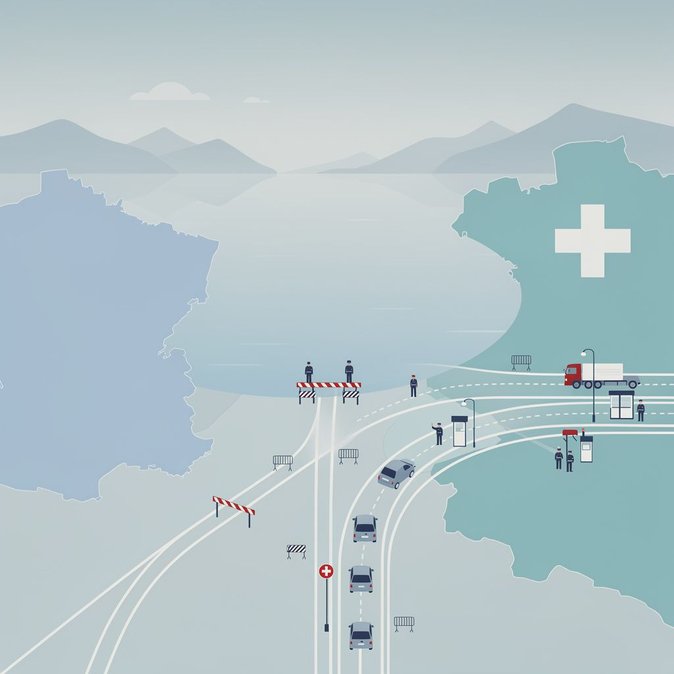
At midnight on 12 June 2026 the European Union’s long-debated Migration & Asylum Pact became fully applicable, automatically modifying the legal framework that governs entry, asylum processing and return procedures in all 27 Member States, including France. Among the headline changes are a new two-step ‘pre-screening’ at the external border that must be completed within seven days, streamlined Dublin transfers, and a mandatory solidarity mechanism under which non-front-line states contribute either by relocating asylum-seekers or by providing operational and financial support. For France the pact means immediate operational adjustments at the country’s airports, seaports and land borders. The Interior Ministry confirmed that Paris-Charles-de-Gaulle, Orly, Nice and Lyon are now running the new biometric pre-screening booths required by Regulation (UE) 2024/1348, while regional prefectures have issued instructions to relocate border-police staff to high-volume crossing points for the first summer holiday peak. Business travellers holding passports from visa-exempt countries will not generally notice the extra layer, but companies should plan for longer queues during the first weeks as officers familiarise themselves with the tools. Behind the scenes, employers that rely on intra-EU posted workers will see faster transfers of responsibility between Member States when an assignee applies for asylum. Legal experts advise multinational clients to review Posted-Worker Notification (PWN) procedures, because the clock for a country to accept or refuse responsibility has been cut from six months to two under the new Dublin rules. This shortens the window during which staff may be required to remain in France instead of moving onward. French tech start-ups have broadly welcomed the common screening template, arguing it will reduce forum-shopping and create more predictable timelines for highly-skilled talent from outside the EU. By contrast, civil-society organisations warn that the seven-day screening period is too short for vulnerable applicants to obtain legal counsel. The first real-world test will come in late June when the initial cohort of summer tourists coincide with the annual agricultural-season recruitment drive. For mobility managers the practical advice is clear: build a safety buffer of 30–45 minutes for arrivals at Schengen external borders, keep copies of posted-worker and assignment letters on hand, and monitor future French decrees that will be needed to align the domestic CESEDA code with the directly applicable EU regulations.
Source: Medi1 News