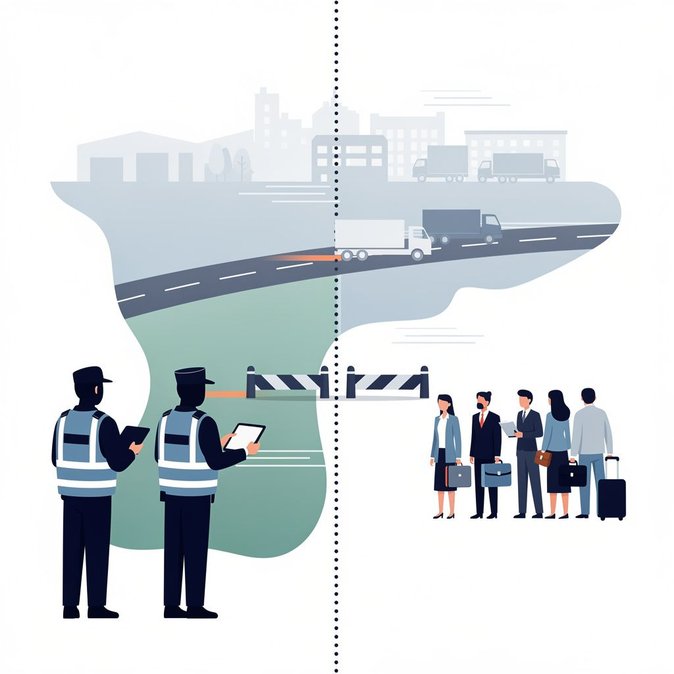
The UK Home Office will deploy additional enforcement teams along routes between Northern Ireland and the Republic in the wake of violent anti-immigrant protests triggered by a knife attack in Belfast earlier this week. Anadolu Agency reports that Justice Minister Jim O’Callaghan discussed the plan in calls with Northern Ireland Secretary Hilary Benn and Justice Minister Naomi Long. Although the Common Travel Area (CTA) guarantees free movement for British and Irish citizens, it does not exempt third-country nationals from immigration control. The Home Office said it would increase spot checks on coaches, ferries and rail services departing Dublin and Rosslare for Great Britain and on roads crossing the land border. For businesses, the immediate impact is likely to be longer transit times for cross-border workers and deliveries, especially those involving non-EU national drivers or staff. Logistics operators have been advised to ensure passengers carry proof of residence or work authorisation. Firms running all-island operations may need to review shift patterns if secondary checks create bottlenecks at peak hours. The Irish Government emphasised that cooperation will focus on intelligence-led operations rather than fixed checkpoints, seeking to avoid disruption to trade valued at more than €3 billion a week. However, commentators note that political pressure after the riots could see ad-hoc measures extended if further incidents occur.
Source: Anadolu Agency