Union Home Minister Amit Shah chaired a high-level security meeting in New Delhi on 12 June to review preparations for the annual Shri Amarnath Yatra, which will run from 3 July to 28 August 2026. The pilgrimage draws nearly half a million devotees to the Himalayan cave shrine each year and poses complex mobility and safety challenges.
For overseas pilgrims, corporate teams, or journalist delegations planning to attend the yatra, VisaHQ’s India desk (https://www.visahq.com/india/) can quickly arrange e-Visas or traditional sticker visas, coordinate group submissions, and provide real-time tracking—allowing travel managers to concentrate on on-the-ground logistics rather than paperwork.
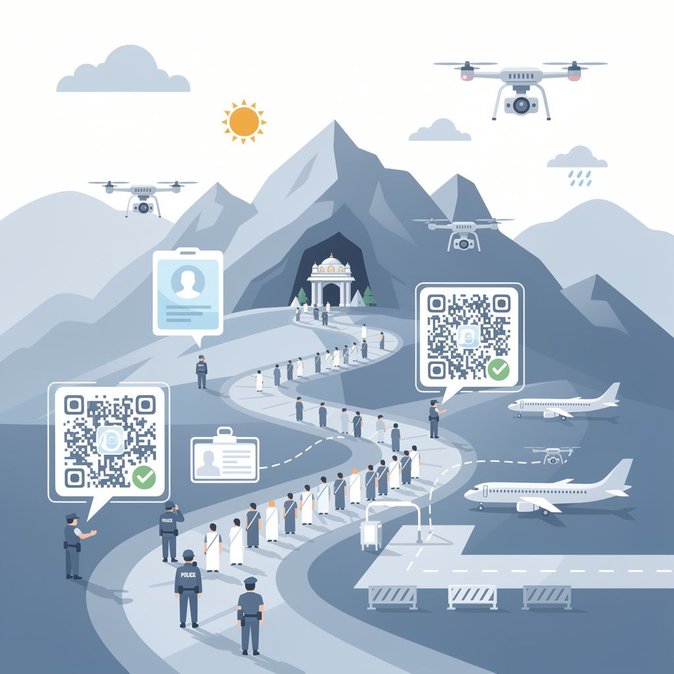
The Home Minister directed Central Armed Police Forces, Jammu & Kashmir Police and the Army to establish a multi-layered ‘impregnable’ security grid along both the Pahalgam and Baltal routes. New measures include real-time drone feeds, expanded CCTV coverage and QR-code-enabled identity cards for all service providers—pony owners, porters and even mules—aimed at eliminating impersonation and streamlining crowd management. Pilgrim movement will be regulated according to live weather dashboards to prevent disasters like the 2022 cloudburst that killed 16 people. The Shrine Board’s online registration portal has been upgraded to integrate health certificates with RFID yatra passes, reducing on-site queuing. For travel and relocation managers arranging executive visits or CSR volunteer programmes in the region, the directives imply mandatory preregistration and likely road-closure windows. Tour operators expect temporary flight restrictions over Srinagar during peak convoy movements, similar to last year’s three-hour daily air-space freeze. Officials also emphasised coordinated disaster-response drills, critical after the 2025 incident where a landslide stranded 8,000 pilgrims. Insurance companies have already signalled a 5–8 percent hike in premium rates for high-altitude travel policies during the yatra period.
For overseas pilgrims, corporate teams, or journalist delegations planning to attend the yatra, VisaHQ’s India desk (https://www.visahq.com/india/) can quickly arrange e-Visas or traditional sticker visas, coordinate group submissions, and provide real-time tracking—allowing travel managers to concentrate on on-the-ground logistics rather than paperwork.
The Home Minister directed Central Armed Police Forces, Jammu & Kashmir Police and the Army to establish a multi-layered ‘impregnable’ security grid along both the Pahalgam and Baltal routes. New measures include real-time drone feeds, expanded CCTV coverage and QR-code-enabled identity cards for all service providers—pony owners, porters and even mules—aimed at eliminating impersonation and streamlining crowd management. Pilgrim movement will be regulated according to live weather dashboards to prevent disasters like the 2022 cloudburst that killed 16 people. The Shrine Board’s online registration portal has been upgraded to integrate health certificates with RFID yatra passes, reducing on-site queuing. For travel and relocation managers arranging executive visits or CSR volunteer programmes in the region, the directives imply mandatory preregistration and likely road-closure windows. Tour operators expect temporary flight restrictions over Srinagar during peak convoy movements, similar to last year’s three-hour daily air-space freeze. Officials also emphasised coordinated disaster-response drills, critical after the 2025 incident where a landslide stranded 8,000 pilgrims. Insurance companies have already signalled a 5–8 percent hike in premium rates for high-altitude travel policies during the yatra period.