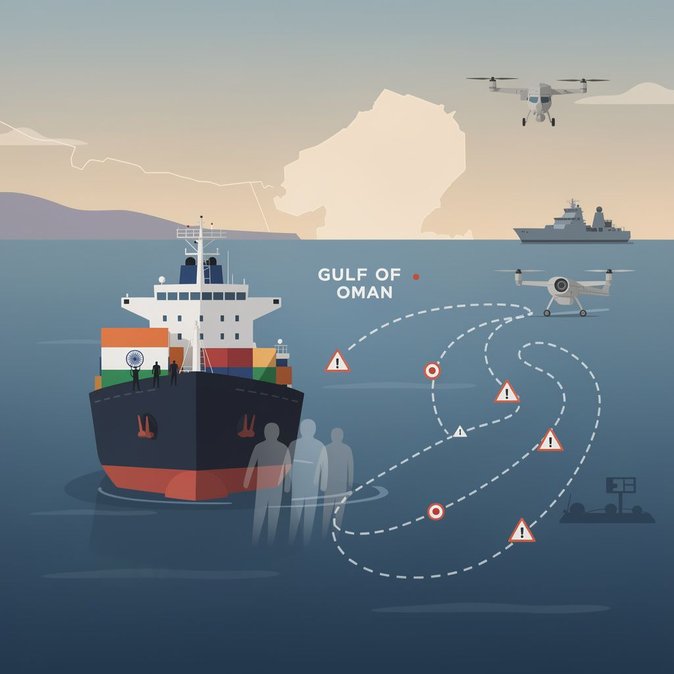
For the second time in 72 hours India’s Ministry of External Affairs (MEA) called in the United States chargé d’affaires in New Delhi on 12 June 2026, registering what officials described as a “strong protest” over repeated US naval strikes on commercial tankers suspected of breaching Washington’s blockade of Iranian ports. The latest missile attack, on the Guinea-Bissau-flagged MT Jalveer on 11 June, left 20 Indian sailors stranded and came barely a day after the bodies of three missing Indian crew from the Palau-flagged MT Settebello were recovered. Although none of the vessels bore India’s flag, their all-Indian crews underscore the country’s growing share—nearly 17 percent—of the global merchant‐marine workforce. Families of the deceased seafarers staged candle-light vigils in Himachal Pradesh and Maharashtra, demanding compensation and safer routing guarantees. Shipping companies are now scrambling to reroute vessels away from the Strait of Hormuz, adding an average six days’ sailing time and extra fuel costs that charterers say will inevitably be passed on to customers. Legal analysts note that New Delhi’s protest stops short of endorsing Tehran’s position but reflects mounting domestic pressure to shield Indian nationals working in high-risk maritime zones. The Directorate General of Shipping has already issued an advisory classifying several Omani and Iranian ports as ‘war-risk areas’, triggering higher insurance premiums and hardship allowances. Multinational energy firms with Indian crew—such as Maersk Tankers and Reliance Shipping—are reviewing rotation policies, with some considering emergency crew-changes in Djibouti or Colombo instead of Fujairah. Travel-risk consultants warn that tighter US rules on secondary sanctions could further complicate visa issuance for Indian mariners who transit US ports after operating in embargoed waters. The episode highlights an emerging geopolitical friction point for India’s mobility ecosystem: as Indian talent penetrates specialised, globalised sectors such as deep-sea shipping, incidents far from national borders can create urgent diplomatic, legal and logistical challenges that HR and compliance teams must monitor closely.
Source: Hindustan Times