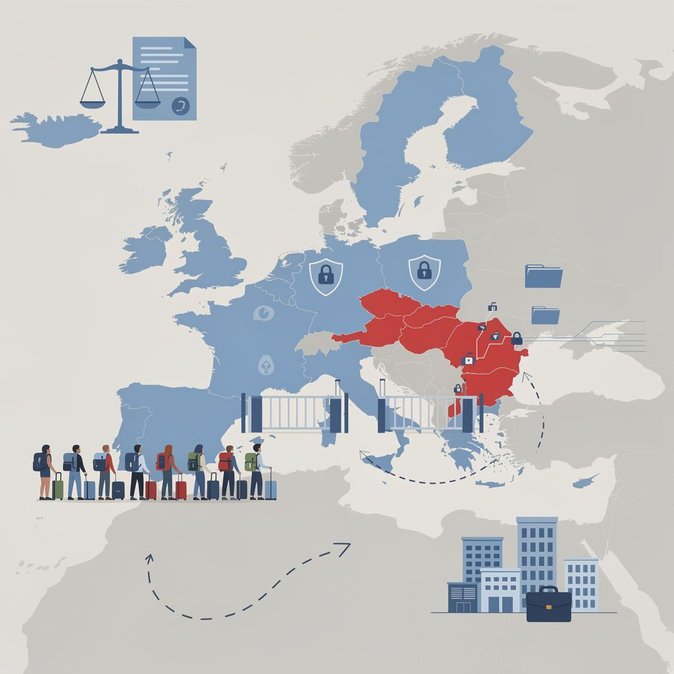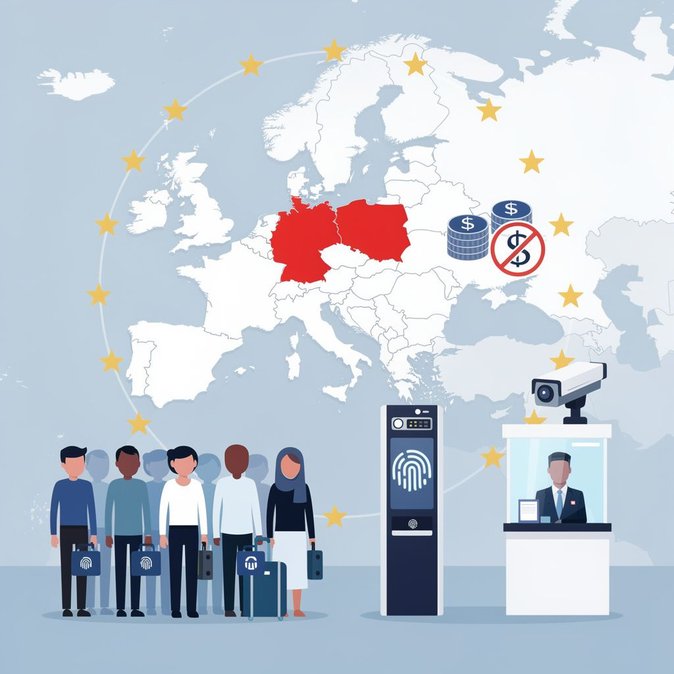
Minutes after the EU Migration Pact became operative, Poland’s Ministry of the Interior and Administration (MSWiA) published a blunt communiqué: ‘Poland will not accept migrants from other states nor bear any costs related to relocation.’ The note, released through the PAP MediaRoom service, reiterates the government’s long-standing red line that compulsory relocation threatens national security. The statement details two years of behind-the-scenes negotiations led by Ministers Marcin Kierwiński and Tomasz Siemoniak, who secured legal language excluding Poland from both migrant distribution and the €20 000 penalty. At the same time Poland pledged to implement the pact’s chapters on external-border technology, data-sharing and accelerated returns—areas it sees as enhancing security and helping to curb smuggling on the Belarusian frontier. For global-mobility managers the communiqué clarifies that no sudden quota of asylum applicants will be redirected to Poland in 2026/27, easing pressure on corporate accommodation budgets in Warsaw, Kraków and Wrocław. It also signals, however, that companies should expect more robust identity checks when moving non-EU staff across Schengen borders into Poland, as the country invests in biometric kiosks and automated gates. Immigration lawyers note that Poland’s stance may complicate future EU talks on a uniform business-travel authorisation system. Brussels has hinted that solidarity opt-outs could reduce access to EU funds for border-management projects—a potential cost for carriers operating at Polish airports. MSWiA emphasised that it ‘remains open to safe, regulated labour migration’, pointing to simplified work-permit rules for neighbouring countries introduced in February. Employers are therefore advised to separate humanitarian relocation, which remains politically sensitive, from skills-based sponsorship initiatives that continue to enjoy government backing.
Source: PAP MediaRoom