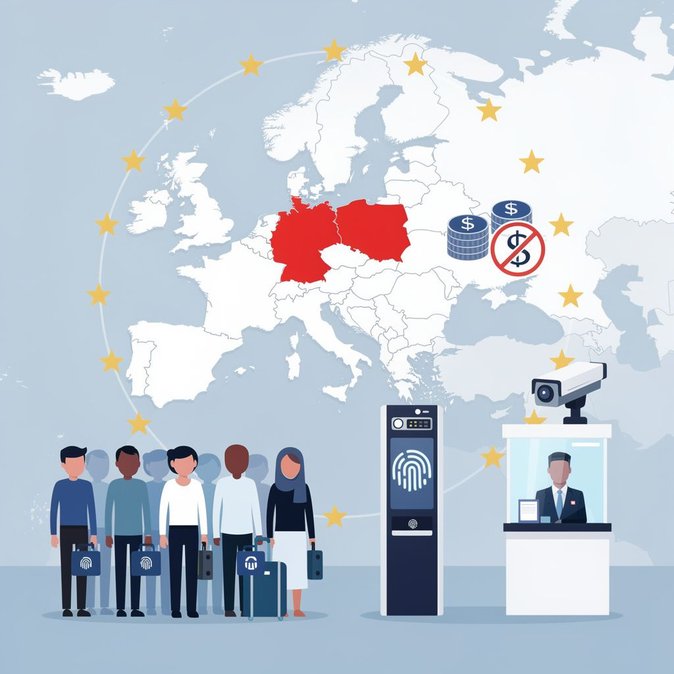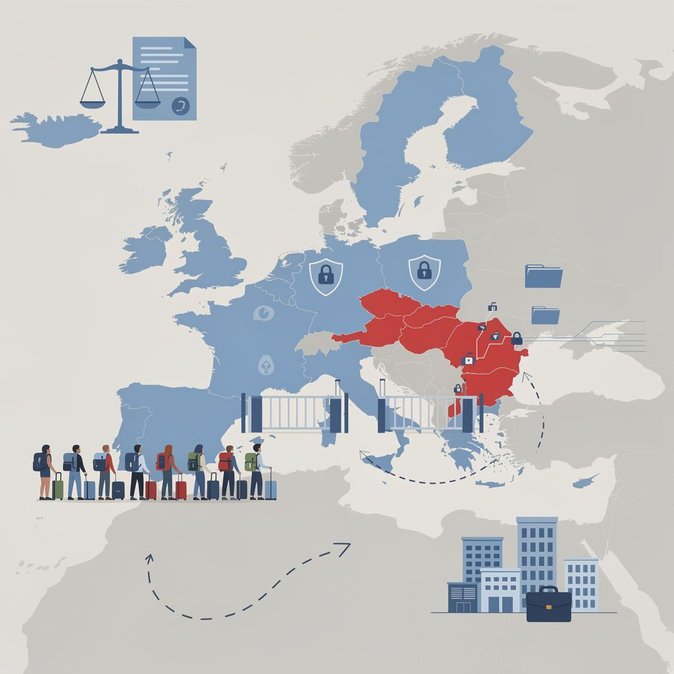
At 00:00 CEST on 12 June 2026 the European Union’s long-debated Pact on Migration and Asylum became legally binding. The Polish Ministry of the Interior and Administration (MSWiA) immediately issued a statement emphasising that Warsaw will apply only those chapters that strengthen external-border security and data-sharing while making full use of negotiated exemptions that free Poland from the new compulsory-relocation and financial-solidarity mechanisms. The Pact replaces the crisis-era rules that made the first country of entry responsible for processing asylum claims. In their place the EU has created a tiered system of rapid border screening, shorter asylum deadlines, an entry–exit biometric database and, controversially, a permanent solidarity pool requiring each member state either to accept a quota of relocated applicants or pay €20,000 per person refused. During the two-year negotiations, Polish ministers secured a carve-out on the grounds of Poland’s frontline role in hosting more than one million displaced Ukrainians and the continuing hybrid pressure on the Belarusian frontier. Speaking in Brussels, Deputy Interior Minister Maciej Duszczyk declared that “Poland will not weaken its security by importing irregular migrants”, adding that Warsaw is ready to defend its position before the EU Court of Justice if necessary. Analysts point out that the opt-out is granted for a renewable two-year cycle and may face legal challenge if the Commission deems Poland’s burden-sharing contribution insufficient. Business immigration advisers therefore warn multinational employers to watch for possible retaliatory moves—such as slower processing of Polish intra-EU transfer applications—should the dispute escalate. For now, practical changes for travellers are limited. Airports and seaports have already begun piloting the EU Entry/Exit System; carriers should brief passengers on mandatory fingerprinting and facial-image capture on first entry after 12 June. Corporate mobility teams should also anticipate tighter document checks on posted workers, as the new Eurodac rules oblige border guards to verify whether a non-EU national was previously refused entry anywhere in the bloc. Finally, HR departments should brief foreign assignees that appeal deadlines in asylum-adjacent residence categories (notably humanitarian parole) have been shortened from 30 to 15 days under the Polish transposition law expected later this summer.