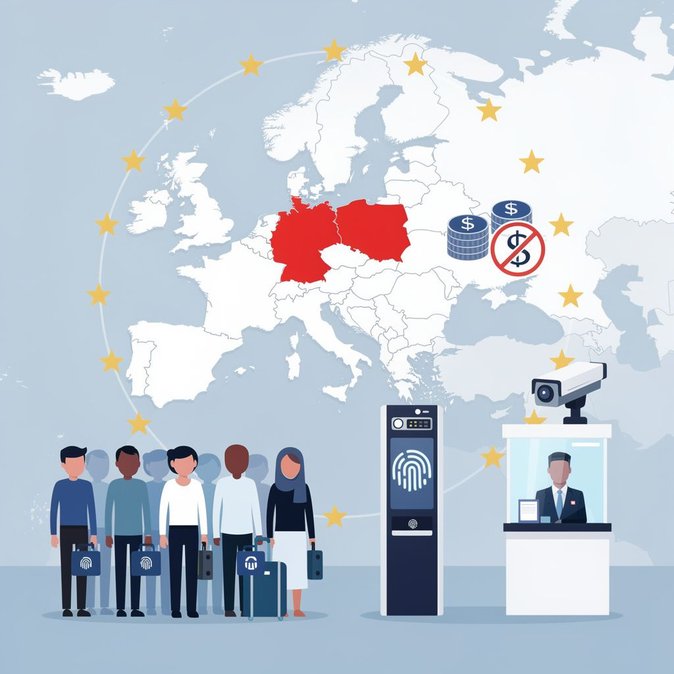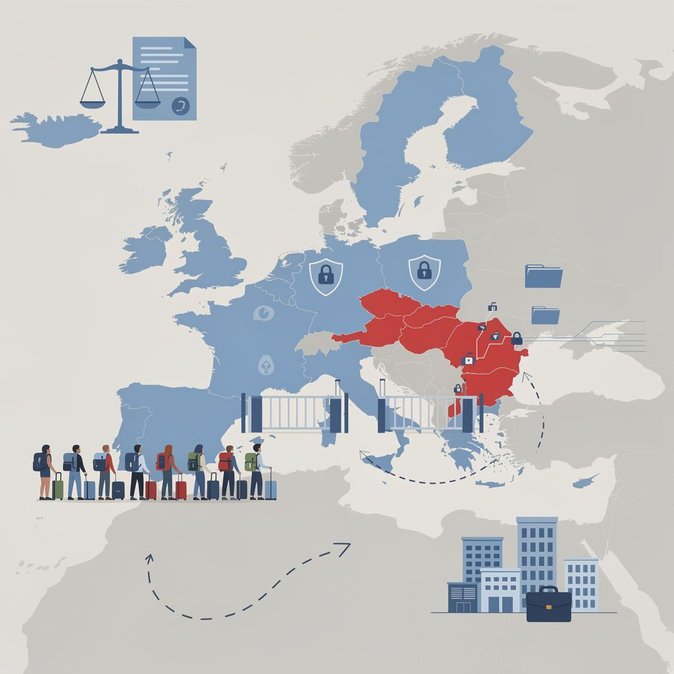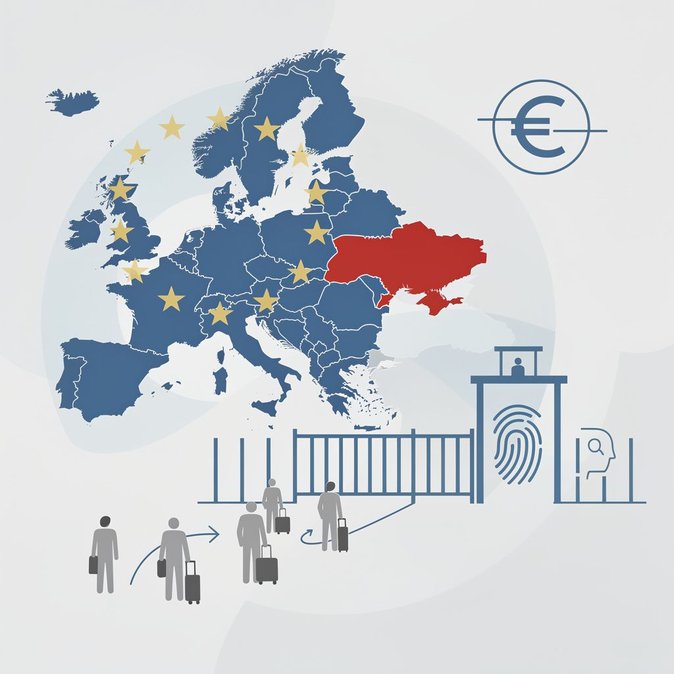
At 00:00 on 12 June 2026 the European Union’s long-negotiated Migration & Asylum Pact formally entered into force. In Warsaw, the Ministry of the Interior and Administration (MSWiA) quickly clarified what the new rules – intended to harmonise asylum screening, accelerate returns and introduce a mandatory ‘solidarity mechanism’ – will mean in practice for Poland. Under a carve-out negotiated in the final weeks of Council talks, Poland will not have to accept any quota of relocated asylum-seekers during the first year, nor pay the €20,000 compensation fee per refused applicant that applies to other Member States. Vice-Minister Tomasz Szymański told reporters that the exemption recognises Poland’s role in hosting an estimated 3.6 million displaced Ukrainians. While Warsaw celebrated the waiver, the government emphasised that it will still implement those parts of the pact that reinforce border security. New pre-entry screening procedures, biometric data collection and expanded access to the Eurodac database will be rolled out at the external borders with Belarus, Russia’s Kaliningrad enclave and – if needed – at temporary controls on the German and Slovak frontiers. MSWiA officials said that additional document-checking equipment and mobile fingerprint scanners have already been ordered, and that Border Guard staffing levels will be increased by 12 % this summer. Business groups broadly welcomed the clarity. Multinationals operating mobility programmes feared that Poland could be drawn into a complex relocation system that might strain administrative capacity and lengthen residence-permit processing times. “Knowing that companies will not face mandatory sponsorship obligations for relocated asylum-seekers in 2026 removes a major unknown from workforce-planning models,” noted Marta Łęczycka, head of immigration at PwC Poland. She added that the focus on border technology rather than quotas should free up regional Foreigners’ Offices to tackle the backlog of work-permit renewals that has doubled since the introduction of the MOS-2 e-filing platform in April. Opposition parties accused the government of overselling the opt-out, pointing out that Brussels will review the situation annually. If migration pressure on the EU’s southern rim remains high, Poland could still be required to contribute to relocation efforts from mid-2027 onwards. For now, however, companies sending assignees to Poland can plan on business as usual – with the added benefit of faster entry screening for third-country nationals when the Pact’s new procedures are fully operational in the Schengen area later this year. Practical takeaway: Travellers and HR teams should expect more thorough biometric checks at Polish borders from July, but no new relocation-related obligations for employers in 2026. Employers should continue to use the MOS-2 portal for all residence-permit filings and monitor MSWiA communiqués for the exact go-live date of the enhanced Eurodac data exchange.