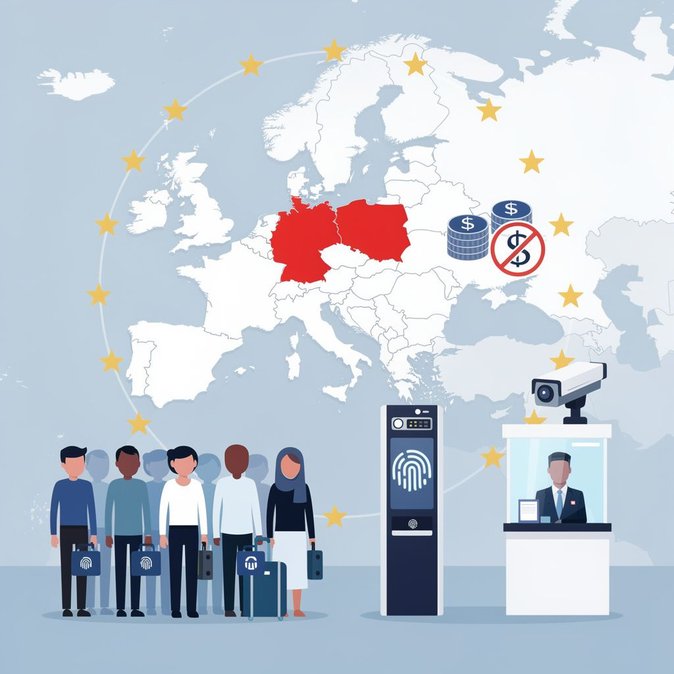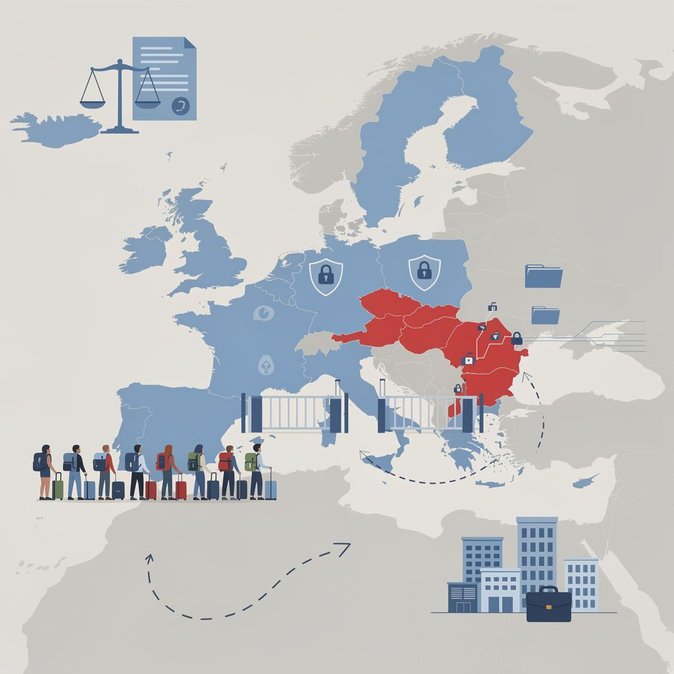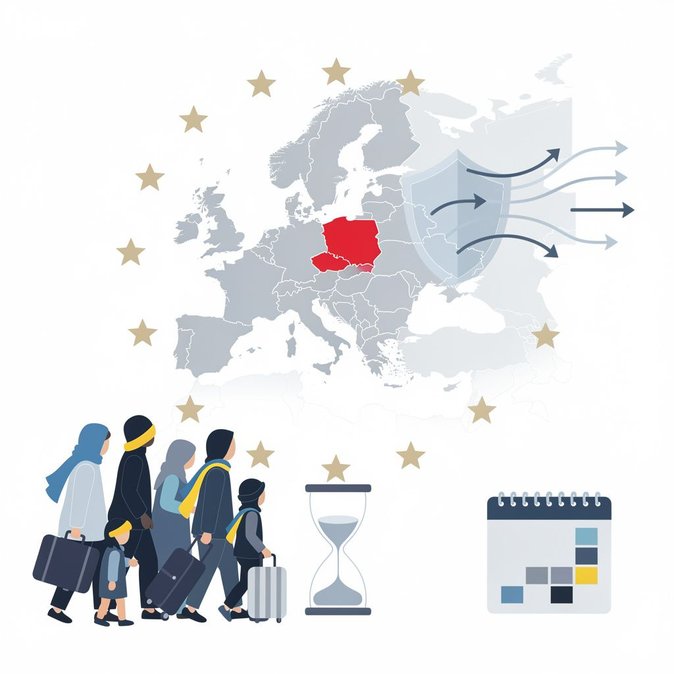
At 00:00 on 12 June 2026 the long-negotiated EU Migration and Asylum Pact formally became law, overhauling how Europe processes asylum claims, runs border procedures and shares responsibility for irregular arrivals. Yet while every member state is now bound by the regulation, Poland has negotiated a one-year exemption from the so-called “solidarity mechanism” that obliges governments either to accept a quota of relocated asylum seekers or pay €20 000 for each refusal. Deputy Interior Minister Tomasz Szymański told public radio that Warsaw’s opt-out reflects ‘the extraordinary effort Poland has already made in hosting more than two million war-displaced Ukrainians’. The European Commission endorsed the carve-out in its final implementing act, but stressed that the derogation will be reviewed annually against real-time migration trends. Austria, Bulgaria, Croatia, the Czech Republic and Estonia obtained identical derogations, signalling a wider Central-European push-back against mandatory relocation fees. For employers the decision removes immediate fears that Poland might face compensatory levies that could have been passed on as new payroll taxes or higher visa charges. Human-resources teams, however, must still prepare for tighter external-border checks and faster returns—two pillars of the new pact that Poland fully supports and will apply at all airports and road crossings. Compliance specialists also note that the exemption does not cover Article 23 of the pact, which obliges companies moving third-country workers across borders to cooperate with biometric registration and data-sharing. Multinationals should therefore audit posting-of-workers files and ensure that assignment letters specify where staff will lodge fingerprints and photographs. The Interior Ministry has promised additional guidance before 1 July. Looking ahead, business associations including the Lewiatan Confederation warn that Poland’s continued reluctance to participate in burden-sharing could affect its bargaining power on other EU dossiers such as the Single Permit Directive and digital nomad schemes. They urge the new government to use the 12-month breathing space to craft a long-term mobility strategy that balances security with the labour-market need for foreign talent.
Source: Radio Szczecin