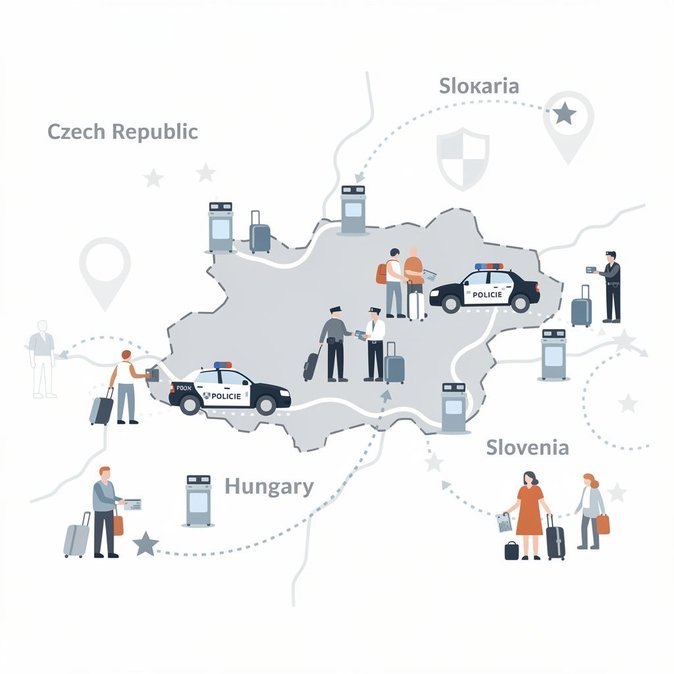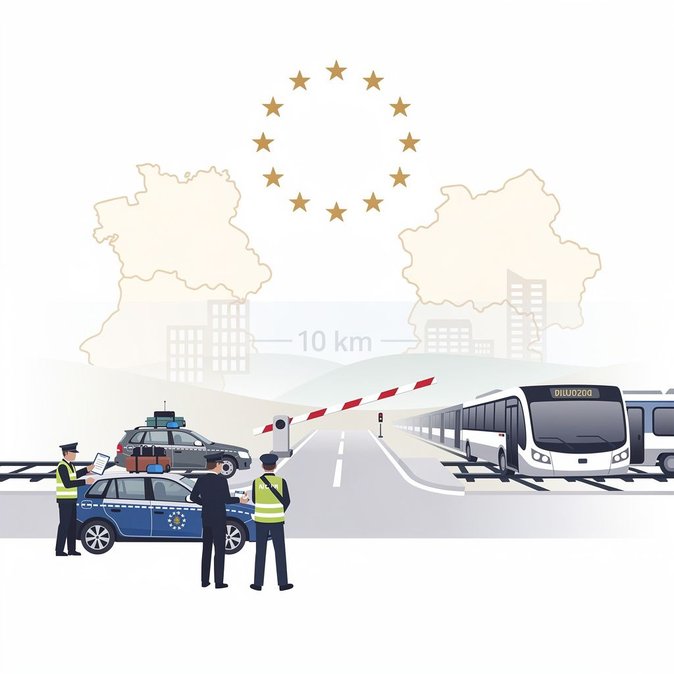
Austria’s interior ministry confirmed on 13 June 2026 that the temporary controls it re-introduced in the wider border area with Czechia, Slovakia, Hungary and Slovenia will remain in force until mid-September. Interior Minister Gerhard Karner (ÖVP) signed the extension order after security agencies argued that the peak summer travel season and the first days of the EU’s new Asylum & Migration Pact required “maximum flexibility” to police irregular movements. Unlike the old checkpoint model, the current regime relies on mobile patrols, automatic number-plate recognition vans and joint mixed patrols with neighbouring police forces up to ten kilometres inside Austrian territory. According to the ministry, the tactics allow officers to focus on secondary migration routes and smugglers’ pick-up points while keeping regular traffic flowing at official crossings. Since the system was introduced last October, officials say detections of smuggled migrants have fallen by 38 %, partly because smugglers now avoid Austria altogether. The extension comes despite a 5 June recommendation from the European Commission that nine Schengen states – including Austria – should phase out internal checks and switch to purely risk-based police work. Vienna argues that the Pact’s new screening and border procedures will take months to bed in, and that Austria remains a key transit country between the Balkans and Germany. Business travel associations broadly support the “light-touch” model, noting that most corporate travellers no longer experience delays, yet they caution firms to keep passports easily accessible and allow buffer time when crossing by road. For multinationals running shuttle buses between Bratislava and Vienna, the main operational impact is real-time passenger data requests from Austrian police. Employers should ensure that drivers carry a passenger list and that non-EU employees have either a residence permit or multiple-entry Schengen visa on hand. Logistics companies report only minor slow-downs but welcome the clarity that the three-month extension provides for scheduling. Travel managers should brief staff that officers may board coaches or trains after the physical border and that failure to present ID can lead to an administrative fine of up to €250. The ministry has not ruled out further extensions but hinted that a gradual draw-down is possible if migrant numbers stay low and the new EU Entry/Exit System proves effective at the external borders.
Source: ORF.at