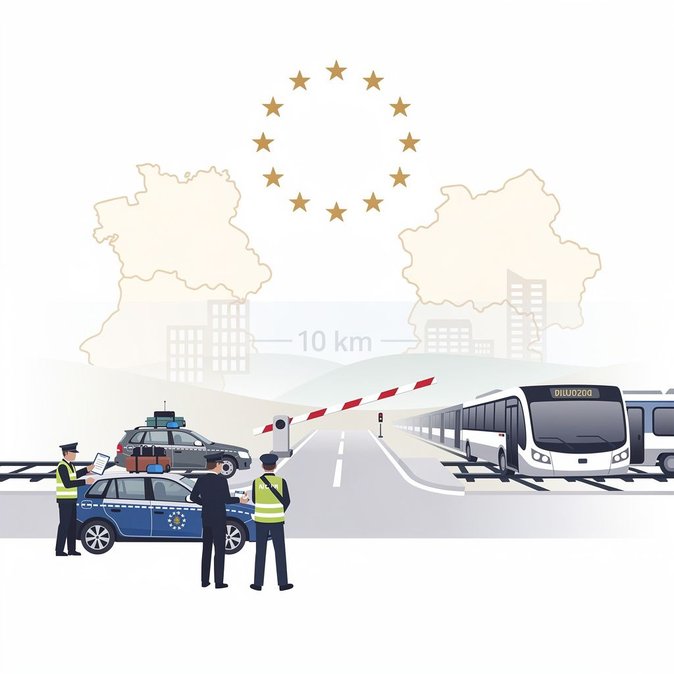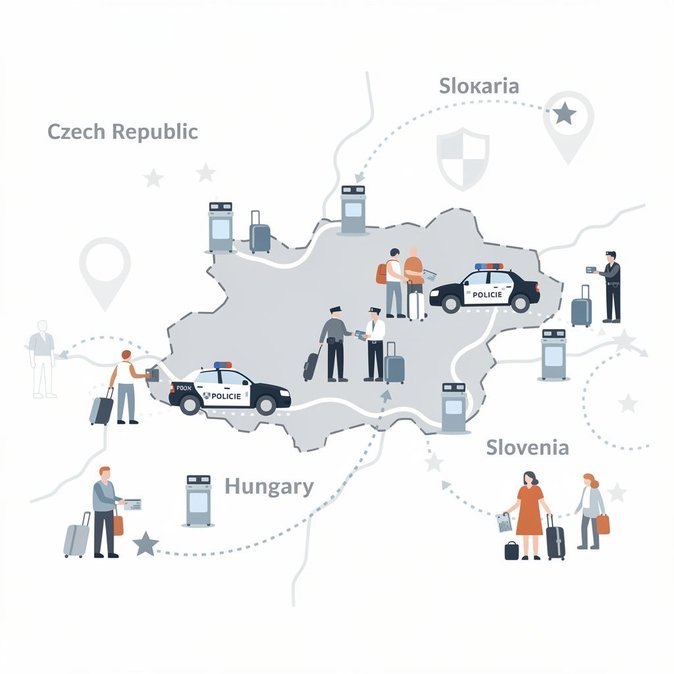
Austria will keep its expanded “Grenzraumkontrollen” (border-area controls) in place for another three months, Interior Minister Gerhard Karner announced in Vienna on 13 June. The new ordinance, which takes effect on Monday, prolongs mobile police checks within a 15-kilometre strip along the borders with Czechia, Slovakia, Hungary and Slovenia until at least mid-September. Karner argued that, even after the EU Pact on Migration and Asylum entered into force on 12 June, national measures remained necessary to curb people-smuggling and secondary movements. The minister said Austria had “re-designed” its concept: instead of fixed checkpoints, officers now operate flexible patrols supported by drones, licence-plate readers and heat-imaging cameras. According to the Interior Ministry, the approach has led to 15 % fewer irregular entries and 120 arrests for smuggling since January. Business travellers driving rental cars across the affected frontiers report minimal delays, but logistics firms complain that spot checks can still add up to 45 minutes to just-in-time deliveries. Vienna’s decision goes against a 6 June recommendation by the European Commission, which urged nine Schengen states to work towards phasing out all systematic internal border controls and to rely on risk-based police cooperation instead. EU Migration Commissioner Magnus Brunner – himself an Austrian – reiterated on Friday that “the world’s most modern border-management systems” introduced with the new Pact should allow gradual normalisation inside Schengen. For companies that rotate staff between Austrian plants and production sites in neighbouring countries, the extension means continued need for passports or national ID cards in vehicles and possible proof of assignment letters. HR departments are advised to build small buffers into travel schedules and to remind third-country national employees that short-stay Schengen visas do not exempt them from on-the-spot identity checks. Should the controls remain beyond September, carriers warn that the summer tourism season could be affected. Hoteliers in the Lake Neusiedl region have already asked the government to publish weekly statistics so that the industry can assess whether the benefits justify the ongoing friction for cross-border leisure traffic.
Source: ORF.at